
In the first of a series, Claire Blakemore sets out why art matters and the difference that positive engagement can have in educational, well-being, employment, and economic terms.
In the last few years, the ‘cost of living crisis’ is a phrase parroted by politicians so incessantly it has become thought paralysing. Often used as a self-evident explanation of why we must tighten the public purse, it is increasingly difficult to open up debate around public spending for fear of being seen as fiscally irresponsible. After all, we need to be grown up about it. There is simply no money to go around for nice little luxuries like reduced hospital waiting times or building new schools.
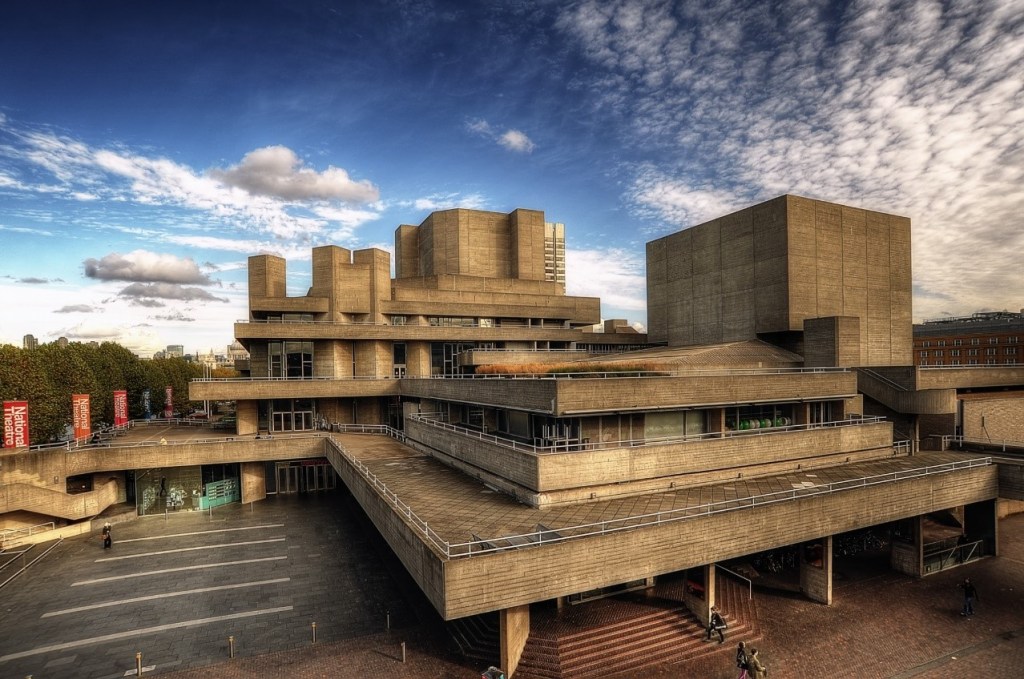
Figure 1 The National Theatre London
Not only this but the cost of living crisis is treated not as a man-made reality (however global and complex the cause), but instead an inexplicable, almost supernatural event that has befallen us. And now that this bone-rattling curse is here, we must accept our new normal. The stance taken by many Conservatives is that it is unnecessary to explore what the crisis means, and how we got here. For example, questions around why Britain is the only major Western economy in which inflation hit double digits or that the economy is predicted to experience the weakest growth in the G7 in 2024, are curiously few and far between. (1)
None of this is to say that there is not a crisis. People are facing extremely difficult choices. The Trussell Trust, an anti-poverty charity that operates a network of food banks across the UK, reported a 37% increase in the number of three-day emergency food parcels it distributed between 31 March 2022 and 1 April 2023, compared to the year before (3).
Meanwhile, the charity National Energy Action (NEA) has reported that as of 1 October 2023, there are now 6.3 million households in fuel poverty. (4)
Local councils facing funding shortfall.
No one is more aware of the stark realities of our current economy than the budget holders responsible for local council expenditure. Councils are on the front line of the crisis and have faced years of chronic underfunding, with no indication from the Autumn budget that this is likely to change anytime soon.(5)(6) Boroughs in the capital will need to make over £500m of savings next year to balance their budgets, leaving their ability to deliver essential services on a knife edge.(6) Tough choices will need to be made. In this harsh climate, it is understandable that what little extra funding there is gets directed into frontline services that need urgent investment like homelessness and adult and social care.
The loser, in times like these, as so often is the case, is that other services that are not critical become harder to justify and fall by the wayside. Nowhere is this more true than funding arts and culture.
Are the arts and creative industries in terminal decline?
The truth is that when we talk about the cost of living, we are really talking about the cost of surviving. The difficult choices that are being made on public expenditure, whether that is at national or local level, are not about how we flourish as a society but where we sleep, how we heat our homes and how we afford to eat. Set within this context, it can sound trite, even callous to refocus the conversation on how we fund theatre, film, art, craft, dance, music, or new writing.
But this is to fundamentally misunderstand what the arts can do, and the benefit they provide to the economy, the fabric of society and the individual’s health and spirit.
Major arts organisations, together with the private creative industries have been sounding the emergency klaxon. But is anyone listening? Everywhere we look there are signs that the arts and cultural sector is in terminal decline. Whether it’s the 47% decline in children taking arts subjects at GCSE since 2010 (7), or the row over the removal of funding for the English National Opera (8); or the 800 libraries that have closed in the last decade (9), or the lack of state-school arts investment leading to a lack of diversity of talent in the creative industries (10) – we are reaching the point of no return.
Alan Davey (Former CEO, Arts Council England; former controller, BBC Radio 3) describes it as a doom loop. (11) Whereby lack of risk taking and investment in future art projects, will lead to reduced participation and further funding cuts. Even if we start to correct the damage being done to our cultural institutions through funding, the skills and talents needed for them to flourish will take decades to repair. Most importantly, this will leave us not only in an economic black hole, but a cultural one.
The arts as a major economic driver
The arts and creative industries are not a nice to have but a major driver of the UK economy. Art and culture contribute £10.6 billion to the UK economy – the UK has a creative economy worth £27bn and culture brings £850m to the UK, through tourism, each year. From 2010 to 2019 the creative industries grew more than one and a half times faster than the wider economy, to be worth more than £115bn, making up around one in eight businesses, and accounting for 7.1% of all UK jobs. (12)
The British Council also points out that the arts provide Britain with “soft” power and influence. Joseph Nye outlined that one of the three key parts to a nation’s soft power is ‘its culture’: how it presents itself and is attractive to other countries and citizens. This can include its heritage and the story told throughout its history, as well as newer and fluid elements of culture such as media, digital assets, and film. (13) Can we afford to neglect such an enormous driver of our growth and global influence?
There is also an increasing understanding that arts and culture have a critical role to play in mitigating social determinants of health. (14) Arts and culture strengthen the community and civic ties that are necessary for people’s overall health and wellbeing. According to The Campaign for the Arts, arts engagement was associated with higher levels of wellbeing, social connectedness, and lower odds of intense social loneliness. (15)
The Mental Health foundation has a similar view, noting that engaging in the arts, social activities and interaction within our communities can help with major challenges, such as ageing and loneliness. It can also help to boost confidence and make us feel more engaged and resilient. (16)
Despite all of the clear benefits of the arts, we are now at a point where the economic crisis threatens to seriously damage Britain’s cultural heritage, with many of the benefits outlined above at risk, having severe consequences for employment, tourism, health, and wellbeing.
Havering and arts funding
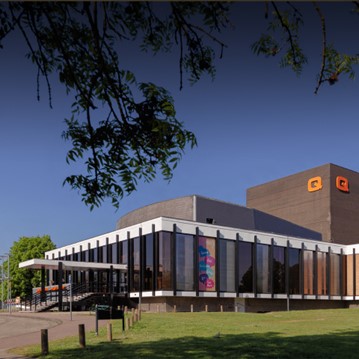
Figure 2 The Queens Theatre Hornchurch
Locally, Havering is facing severe financial problems, and there is a real possibility of bankruptcy, with a Section 114 Notice potentially being issued in the next few months. [3] This will mean that they will not be able to make new spending commitments. (17) Realistically, if we want to protect the arts and cultural organisations that already exist in Havering, more concerted efforts will need to be made to fight to protect current and future investment.
In better news, there are signs of positive steps forward to this effect, including the recent bid for Havering to be a London Borough of Culture for 2025. The bid aimed to bring in millions of pounds of investment and was put together by a collaboration of organisations under the umbrella of Havering London (made up of Havering Changing, FUSE – a local cultural education partnership, Communicating Havering, Creative Health Havering, and Havering Council) whose vision is to transform us into a hub of creative innovation. (18)
Regardless of the outcome of the bid, it matters that there is a collective enterprise fighting locally for arts and culture, championing its importance for the community.
If not now, when?
The economic picture is bleak. Local councils face extremely difficult choices. It can feel almost impossible to talk about issues like arts investment in these circumstances. But, if not now, when? The cost is too high if we do not defend our cultural institutions when they are at their most vulnerable. Now is exactly the right time to ask questions of our politicians and leaders, when the threat to the arts is higher than ever before. It is now, we need to start asking ourselves what we value as a society. We will need to take an unflinching look at what it will cost us all if we do not protect and fight for what makes our lives so worth living in the first place. Because if the arts can do anything at all, it teaches us not just what it means to live but how to come alive.
This marks the start of a series of articles that will explore the importance of arts and culture in Havering, examining what they mean for the local area as we mitigate budget cuts, and prepare for a national election.
| Originally from Havering, Claire Blakemore is a freelance writer with over ten years’ experience in the communications industry. Having graduated with an MA in Creative Writing from Birkbeck in 2022, she has a particular interest in working class representation in storytelling and literature and is currently writing a series of essays about widening arts participation in the UK. |
References for Arts and the cost of Living
No. Topic Reference
1 Weakest growth in G7 https://www.reuters.com/world/uk/uk-set-have-weakest-growth-among-g7-2024-imf-forecasts-2023-10-10/
2 Highest inflation in Europe https://www.newstatesman.com/chart-of-the-day/2022/08/uk-inflation-rate-2022-vs-europe-g7-other-countries
3 Trusell Trust & Food banks https://www.trusselltrust.org/news-and-blog/latest-stats/end-year-stats/#:~:text=Between%201%20April%202022%20and,parcels%20were%20distributed%20for%20children
4 National Energy Action, fuel poverty https://www.nea.org.uk/energy-crisis/
5 Autumn budget https://www.local.gov.uk/sites/default/files/documents/Autumn%20Statement%202023-%20LGA%20briefing.pdf
6 Council underfunding https://www.insidehousing.co.uk/news/shortfall-in-london-councils-budgets-increases-to-600m
7 47% decline in arts enrolment at GCSE, Campaign for the Arts https://www.campaignforthearts.org/huge-decline-in-arts-subjects-worsens-at-gcse-and-a-level/
8 Funding of English National Opera https://www.theguardian.com/music/2022/nov/09/english-national-operas-funding-to-be-cut-to-zero-unless-it-moves-from-london
9 Closure of libraries https://tribunemag.co.uk/2021/01/the-quiet-disappearance-of-britains-public-libraries
10 State school education underfunding and diversity of talent https://assets.website-files.com/65539fe2a43de480289f25d5/65551867c1da387e32dcee9a_CREATIVE%20INDUSTRY%20ALLIANCE_LETTER_15.11.2023.pdf
11 Alan Davey Doom Loop https://www.theguardian.com/education/2023/dec/01/the-arts-are-heading-into-a-doom-loop
12 Arts Council England, Arts contribution to the economy https://www.artscouncil.org.uk/research-and-data/contribution-arts-and-culture-industry-uk-economy
13 Culture and soft power https://www.britishcouncil.org/research-insight/arts-culture-soft-power
14 Arts as a mitigating factor in social determinants of health https://pubmed.ncbi.nlm.nih.gov/31038422/
15 Campaign for the Arts: How the arts can benefit us https://www.campaignforthearts.org/the-arts/benefits/
16 Mental health foundation: how the arts can improve your health https://www.mentalhealth.org.uk/explore-mental-health/blogs/how-arts-can-help-improve-your-mental-health
17 Havering Council Section 114 notice https://www.havering.gov.uk/news/article/1290/an_update_from_the_leader_on_council_finances
18 Havering London bid https://haveringlondon.com/
 Havering Fabian Society