
This article is part of a series covering the Fabian New Year Conference , written by Dave Baldock and Sue Watson
PANEL
Sarah Jones MP, Shadow Minister for Industry and Decarbonisation
Katie White OBE, PPC for Leeds North West
Eloise Sacares, Researcher at the Fabian Society
Cllr Mete Coban MBE, Hackney Council, Cabinet Member for Energy, Waste, Transport and Public Realm.
Chair: Helena Horton, Environment reporter for the Guardian
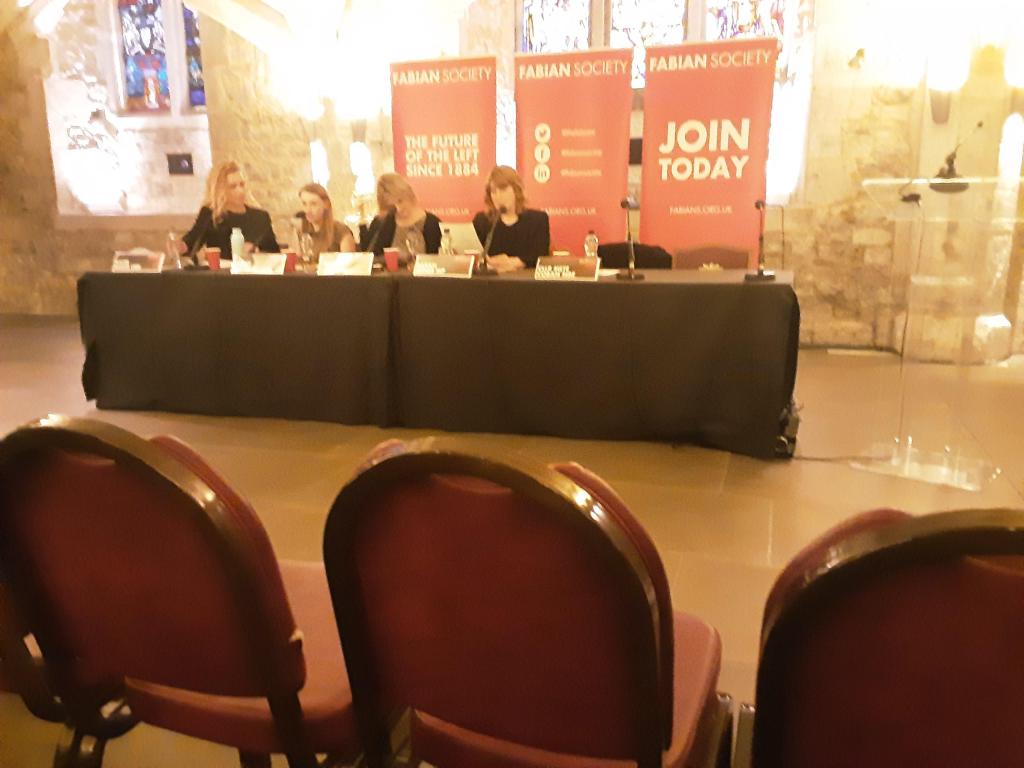
Sarah Jones began the session with background to how Labour organised around this issue. At Shadow Cabinet level the oversight of this area was dealt with by John Reynolds (Industry) and Ed Miliband (decarbonisation)
Over the preceding days, the announcement had been made on the future of Port Talbot steel works, which would potentially see 3.000 jobs lost[1] as the result if two furnaces. Labour would not do this, and a key part of the Industrial Strategy was to retain steel making capacity. In part this would be due to security issues.
The Government was failing on climate change, to the extent that its internal critics had resigned to cause a by election (Chris Skidmore Kingswood). The crisis is deepening, and recent projections has suggested that the UK would face demand for water greater than supply in the 2050’s.
There were lots of ideas about what could be done and support from the relevant UK industries. Labour had the ambition to deliver these and looked to the Biden Administration in the USA for what could be done[2] with a more active state. It is important to consider Biden’s increased investment into this area had not resulted in a poll lead.
Labours aims in this area were.
Help communities to cope with the cost-of-living crisis – windfall taxes may help this.
Create Great British Energy – to ensure independence.
Create a National Wealth Fund – to reinvest in ports and infrastructure.
Upgrading the National Grid
Reform planning.
Reform the Apprentice Levy to increase support for technical colleges and similar institutions,
Insulation of drafty homes – a proposal that would create lots of jobs.
The was widespread disillusionment with politics on the doors and people were now listening to Labour. Labour needs to be believed if we are to get elected and deliver.
The next election would be the first where Climate change was seen by the electorate as a big issue.
Eloise Sacares has written a recent pamphlet for the Fabian Society on these issues [3]. Already the UK is having to cope with climate change, and it is vital we meet the net zero commitment. We are already seeing extreme weather including floods, heat, and drought. There had been a record number of deaths globally from these. There had already been six hundred flood warnings in the UK before the end of January.
The government has not adapted. Flood defences are weak, and this is an area we can address through a change in policy. There is scope for Labour to make a difference. It is low income and the most vulnerable people that suffer from flooding and overheating.
Should there be a maximum working temperature law, and tougher requirements for resilience from infrastructure suppliers.
Katie White has a climate change background and is PPC for Leeds North West. The science is clear, and the position is getting worse. What opportunities does this present?
Growth is central to Labour’s economic recovery plan and the green sector is important. The United Kingdom had a competitive advantage in 2010 but had lost three out of ten of the world’s top businesses in this area since,
Globally there is a big north \ south divide.
We need to identify what are the key industries in this area and locate new industries in the North to achieve some “levelling up.”
Aston Martin were now producing gear boxes for wind turbines. This type of change is a good example of how industries can adapt.
Mete Coban is a Hackney Councillor. Labour needs to focus on green jobs and lower energy prices. Need to consider how to engage with and encourage people. Hackney has a green zone with £61 million investment in to sustainable transport, and trees – 5.000 had been planted on the streets, 1,000 in parks.
Hackney has a community energy fund to encourage initiatives in schools, churches etc. There are lots of jobs in this area, but a skills gap that needs addressing.
The Council is looking to provide Electric Vehicle (EV) charging points. Local businesses are very engaged when the Council can give certainty on what will be done.
Younger people are interested in this, and it is important we do not betray them by not acting now.
It is good to have innovative ideas. For example, why not increase tax on SUVs and frequent flyers?
It is important to focus on outcomes and not the £28 billion figure that has dominated the Labour approach[4]. This would make the issue real for people and needs to be supported by a clear argument against the costs of not acting now.
More trees will help with Carbon dioxide absorption. Reversable heat pumps will enable cheaper cooling.
There were several interesting questions.
The young were not homogenous and while some were very engaged with climate issues, others were not. This applied to traditional politics as well.
Farming issues had not been addressed yet and need to be.
Fossil fuel lobbyists prevail at COP, and this is an issue.
Homes need to be built in the right place (not flood plains). Should all new homes have solar panels and full insulation?
An interesting session which reflects how fast the issues can change. The Port Talbot decision had just been announced. The move to remove two blast furnaces had environmental positives but would decimate employment in the area. There were options. The comment about needing outputs rather than a £28 billion figure proved all too accurate!
DB
[1] ‘Devastating’: Port Talbot steelworks to shut blast furnaces and shed up to 2,800 jobs | Tata | The Guardian
[2] Green New Deal explained: What is it and Biden’s climate plan compare? | The Independent
[3] Whatever the Weather | Fabian Society
[4] This was before the announcement on 9th February Starmer’s £28bn green plan was bungled but Labour still has bold hopes for the country – and the planet | Polly Toynbee | The Guardian
 Havering Fabian Society