Barking and Dagenahm Councillor Juila Williams writes
One of the most common things said to councillors is “Why are we paying council tax and getting nothing for it?”
It’s a fair question, and most people will naturally assume that their council tax is mostly spent on bins and road sweeping, which is the most visible service the council offers.
But actually, most of the council’s money, including a large part of your council tax, goes on something called Adult Social Care. This is a statutory duty, which means councils are legally required to fund and provide it.
So what does that mean?
Adult social care is not NHS care. It is care-run and funded by local councils.
It includes:
• Care homes and nursing homes
• Home carers visiting people 2-4 times a day
• Support for adults with learning disabilities
• Support for adults with physical disabilities
• Support for people with dementia and Alzheimer’s Disease
• Day centres, supported living and respite care
• Safeguarding vulnerable adults
Let’s give you an example of what I mean. My friend Jean had to admit her mother Kathy into a nursing home 4 years ago. Kathy is only 72 but has suffered several strokes and is showing signs of dementia. She couldn’t look after herself at home anymore. Jean sold Kathy’s house and is spending the money it raised on the nursing home fees. This particular nursing home is lovely, but not luxurious. The staff are brilliant and Kathy is perfectly happy there. It costs just under £6,000 a month.
Obviously, if Kathy had been a council tenant, the council would have been responsible to pay these fees from the outset, because there would have been no house to sell.
Jean tells me that the money from the house will run out in the middle of 2026. At that point, Jean will have to ask the council to fund the nursing home. In practice, the council cannot simply refuse. They could ask Kathy to move to a cheaper home, but to be honest she’s happy, and the costs are very similar everywhere.
So what does that mean for your council tax? Who pays for care homes like the one Kathy lives in?
• Jean will pay for it from the money raised by the sale of Kathy’s house. While someone has assets (like a house or flat), they usually have to pay for themselves, until the money runs out.
• Care homes commonly cost £4,000 to £7,000 a month and rising every year.
• When Kathy’s money runs out, the council will step in.
• Kathy will still contribute:
o Her state pension
o a small personal allowance if she can, or any relevant benefits she can get.
• The rest of the fees are paid by the council
That council funding comes primarily from your council tax and some government grants, with council tax being a major part of the local contribution.
But I thought the NHS paid for this sort of thing?
• Usually no, that’s not what happens. The NHS only pays in very specific cases under a scheme called ‘NHS Continuing Healthcare’.
• Dementia alone often does not qualify for NHS funding.
• This is why families are often shocked when they discover the NHS isn’t paying.
But what about carers visiting people at home? Isn’t that NHS?
• It’s true that people often pay a contribution to their carers, but the true cost of those visits is much higher.
• The council pays the difference.
• That funding again comes from council tax and central government support
This is why around £7 out of every £10 the council spends every year goes on Adult Social Care and children’s services. It’s about looking after our parents, grandparents, neighbours and let’s be honest, maybe us too one day.
Of course bins, litter collection and street cleaning matter, and councils respond to those issues. But most council tax is quietly spent on care you may never see, until one day you or someone you love needs it. So when we ask, “Why am I paying council tax and seeing nothing for it?” hopefully it’s comforting to know that we are in actual fact contributing our bit to the safety net that holds our community together ‘from the cradle to the grave’.
(It’s also worth mentioning that Barking & Dagenham’s adult social care is independently recognised as being Outstanding by the Care Quality Commission. That’s a huge credit to the dedication and professionalism of our adult social care officers, and to the leadership of Cllr Maureen Worby in this area.)
Julia Williams is Councillor for Village Ward in Barking and Dagenham
The polls show a large Labour lead and a prospect of the Party returning to Government after the worst result since 1935 in the 2019 election,.
Locally the prospects are good. The small Labour majority in Dagenham and Rainham should be increased if the national polls are in any way accurate.
Romford has long been a safe Conservative seat. However, the national Labour lead is likely to dent the majority. The local issues with the MP absent from the House of Commons for an extended period appear to have been resolved. What is less clear is the extent to which defections by Romford Conservative councillors reflects a wider split within the local Tories, and whether this will mean a depleted number of activists. This could be a factor, or irrelevant. Defections from Romford Conservative Councillors to the Residents suggest there is something happening.
When Havering has changed MPs in the past, the swing from the Governing Party has been above the national average – if repeated, then Romford could be very much in play.
Hornchurch and Upminster has a larger Conservative majority. It does however have no Conservative Councillors. This means the electorate have no “tribal” loyalty to the Conservative Party. As in 1997, it is possible that electors who support the residents at Council elections are prepared to vote for someone else in a general election. This could be Labour or Reform. A strong Reform vote at the expense of the Tories could bring the seat in to play. The sheer size of the majority means the seat is at the outer reach for Labour although if Labour maintains a twenty per cent plus lead its game on.
Demographic factors may help Labour in the longer term. The Borough has an increasingly diverse communities, although changing voting patterns do not mean this guarantees a higher level of Labour support.
The national trend is for young voters to support Labour – a recent poll suggested that Labour is ahead in every age group up to the over sixty-fives. If sustained, this would help Labour locally.
Beyond Havering, the forecast is for significant Labour gains in London. Polls with the widest opinion poll lead for Labour could see the Conservatives wiped out in London. This seems unlikely\ optimistic.
In Essex, the polls show Thurrock turning Labour, with gains in Southend and Colchester. Even Clacton could return a Labour MP. The polls also show both Basildon seats returning a Labour MP. As with Havering when Governments change Essex tends to swing more than the rest of the Country.
There are a number of Labour candidates who have spoken at Havering Fabians.
Seat
Candidate
Dagenham and Rainham
Margaret Mullane
Romford
Andrew achilleos
Ilford South
Jas Athwal
Ilford North
Wes Streeting
Barking
Darren Rodwell
East Ham
Stephen Timms
Eltham and Chislehurst
Clive Efford
Felton and Heston
Seema Malhotra
Reading and West Berkshire
Olivia Bailey
Harrow West
Gareth Thomas
Thanet North
Polly Billington
Gillingham and Rainham
Naushabah Khan
Thurrock
Jen Craft
West Lancashire
Ashley Dalton
Leeds South
Hilary Benn
There are some departing MPs who have spoken to us as well.
Jon Cruddas
Dagenham and Rainham
Geraint Davies
Swansea West
Margaret Hodge
Barking
In addition, Catherine Deakin who attended our zoom meeting with Hilary Benn is the candidate in Broxbourne.
There are many reasons I disagree with Toby Young, but one in particular is his reaction to the film I, Daniel Blake. The film, by Ken Loach, charts how a disabled man in his late fifties, out of work and with poor IT literacy tries to navigate his way through the benefits claims system, and finds himself caught up in an Orwellian bureaucratic nightmare. Toby Young was very upset. Not with the fundamental inhumanity of the Department for Work and Pensions claims system, or with the startling levels of poverty and inequality that have found themselves embedded in modern Britain. He was upset because he thought Loach had an: ‘absurdly romantic view of benefit claimants.’ He was upset because the benefit claimant wasn’t ‘drinking, smoking, gambling, or even watching television’. He was upset because Loach had the audacity to create a character that ‘listens to Radio 4, likes classical music and makes wooden toys for children’. [1] Toby Young was incandescent that a piece of art demonstrated that working class people were cultured.
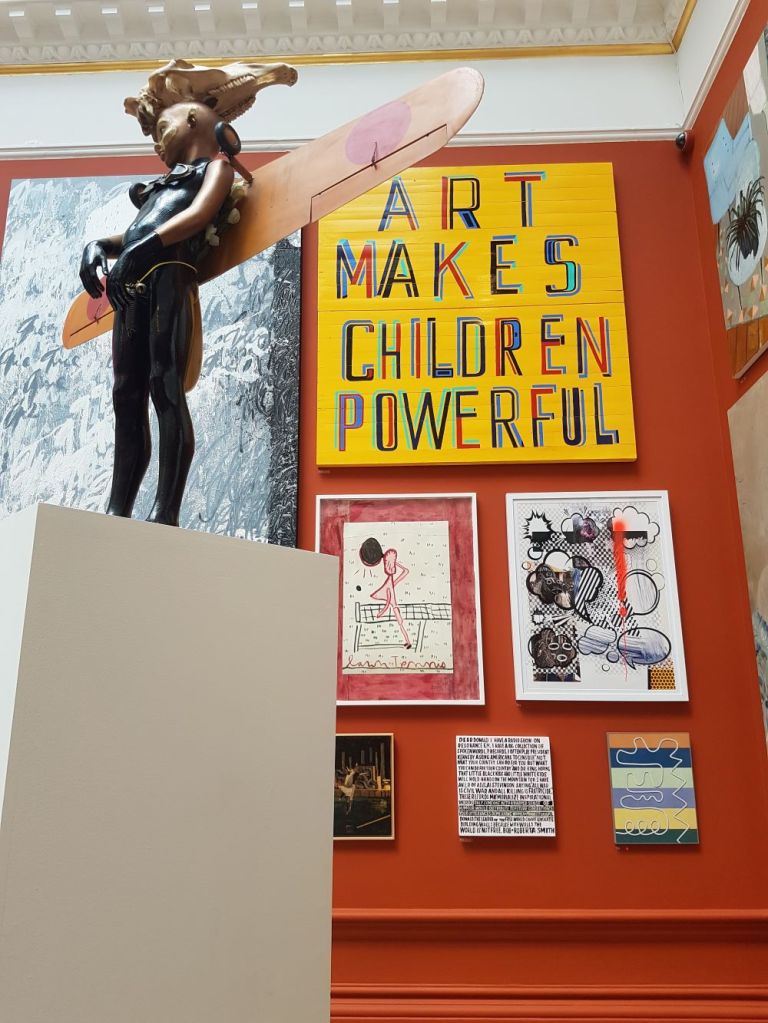
Figure 1Photo taken by Claire Blakemore Royal Academy Summe Exhibition 2017
That someone to the right of the political spectrum has this reaction isn’t much of a surprise. The last fourteen years of Conservative rule has been characterised by the strategic
de-prioritisation of the arts. In the state school curriculum art, dance, drama, literature and
music has been pushed aside in favour of science, technology, engineering and maths; leading to a startling 47% drop in students taking arts subjects at GCSE. [2] Funding in schools for these subjects is so bad, that Labour reported in 2022 that less than £10 is allocated per student for all music, arts, and cultural programmes. [3] The devaluing of the arts has been further compounded by local funding cuts that have reduced access to arts and cultural venues and spaces. In 2019/20, around 53.5 percent of 11-15 year olds in England were participating in theatre and drama activities, compared to 69 percent in year 2008/09. [4] The reality for too many young people is that they will never have visited a theatre, been to an art gallery, or museum to experience first hand the transformative power of art and culture.
The Cultural Learning Alliance calls this the learning enrichment gap, in 2017, a Sunday Times investigation found that private schools in London alone have 59 theatres.
between them, with many of them being state of the art. By contrast, the West End only has 42
theatres. [5] We spoke to local teachers in Havering, who say that the appetite for attending local theatres is as high as ever, and that many schools are still running trips and days out to the theatre, but that this effort is hampered by lack of funding. The number of places offered for students are limited, with demand vastly higher than places available. One of the biggest issues is the cost of staffing to replace the teachers that chaperone trips. Some teachers resort to using their own days off to minimise the staffing costs and make these trips happen. The teachers we spoke to said that to increase participation it would be great for theatre companies to visit the school themselves, or have more opportunities for artists in residence so that pupils see first hand what it means to be a professional creative. While there are some fantastic initiatives, for example Speak Up run by the National theatre, a lot depends on secure long-term funding for schools and local arts venues. Meanwhile, schools are increasingly losing art and drama teachers and the willingness and appetite for schools to provide access to these activities is precarious and too dependent on the goodwill of passionate teachers to keep them going. For example, if a drama teacher leaves, it can be the case that the provision of drama teaching will leave with it, given the subject is not on the national curriculum. Right now, the pressure on teachers is higher than ever, and with that, it is easier for cultural enrichment activities to fall down the list of priorities.
One of the consequences when we devalue the arts in state education is that we end up
with unequal representation in our creative industries. According to an analysis by
Labour nearly half of all British cultural stars nominated for major awards in the last decade
were educated at private schools. This is despite only 6% of the population being privately educated. [6] Meanwhile, the creative industries are suffering from a drought of diverse, imaginative creative talent. A report by Creative Access found that class is the missing dimension in diversity and inclusion in the creative industries, with 73% believing there is class-based discrimination, this is particularly pronounced in publishing. [7] While this is set to have an impact on our cultural heritage, health of our creative economy and international standing, another key dimension of denying children arts and culture is the impact on their mental health. A comprehensive study by Oxford researchers in 2023 found that young people’s mental health deteriorated during COVID-19, with higher levels of depression and social, emotional and behavioral difficulties than before the pandemic hit. [8] Arts and culture form part of a holistic package of education that ensures children feel a sense of connectedness to themselves, each other, and society. Art may not be a panacea for mental health, but allowing children the opportunity for artistic expression does form an important part of a broader education of the whole child.
But change, finally, is afoot. In March, Keir Starmer outlined Labour’s vision and long term strategy for the arts – putting creativity, art, and culture at the heart of their stated aim of a decade of national renewal. As Charlotte Higgins from the Guardian pointed out, the content of his speech mattered less than the fact that he was making it at all. [9] There has been a deafening silence for too long on the importance of the arts and culture to the UK, despite it being a fundamental component of our soft power as a nation, and as Starmer has pointed out, the bedrock of our ability to attract international investment – for example he noted Warner brothers building studios in the UK. In his speech, Starmer has promised to put creativity at the heart of the curriculum, ensuring that the school accountability framework is reworked to make sure that the arts count and that all children should study an arts or sports subject until 16. He also noted the importance of oracy skills being woven into the education system, something that private education already prides itself on. Encouragingly, there was also acknowledgement of the importance of the arts for health and wellbeing, noting that young people face a mental health crisis that the arts could go some way to mitigate. Starmer noted that while he ‘cannot turn on the taps’ in terms of funding straight away, the curriculum is something that is an immediate change that can be made. [10]
While the election is far from won, Keir Starmer’s speech was the first time anyone working in arts education has a reason to be hopeful in a long time. That we may, if all goes well, have someone in Downing Street who understands that the arts and economic vitality is not a zero sum game. That growing the economy and investing in the arts is not mutually exclusive. The stunted imagination evident in education policy in recent years has been worrying. When Rishi Sunak announced he wanted everyone to study maths to 18 it suggested there was no greater vision for education and skills other than educating everyone to become an investment banker like him. [11] This wouldn’t be so much of a problem if this announcement was complemented also by a focus on the arts, or it was joined up in some way with other elements of the curriculum, to provide young people a holistic education. It was a good example of policy being led by ego not evidence. Perhaps someone should tell Sunak about the link between mathematical and musical ability, and that studies show children who play musical instruments are able to complete complex mathematical problems better than peers who do not play instruments. [12]
Meanwhile, after 12 culture secretaries in 14 years, we now have the tantalising prospect of Thangam Debbonaire as a potential culture secretary. Debbonaire was a professional cellist who performed as part of the Royal Liverpool Philharmonic Orchestra and describes her potential future post as her ‘dream job.’ If Debbonaire was elected, it would be a huge departure in and of itself, given that none of the last 12 cultural secretaries have had an arts education, the majority coming from Law or Finance backgrounds. [13] In a recent speech at Remix Summit London 2024, Debbonaire made another crucial point about the importance of arts and culture – the link with progress and emerging technologies, noting: ‘It is the creative industries that stimulate ideas of what another world could look like’. [14] Both Debbonaire and Starmer seem to fundamentally grasp that investment in arts and culture is what drives innovation, rather than distract from it. Crucially, both talk about creating the right conditions for art and culture to thrive, and that there has to be a holistic ecosystem, supported by many parts of society for people to not just take part in the arts, but take risks in it. Debbonaire has also underscored the need for diversity and equality to be part of building the right ecosystem, a critical dimension if we are to truly develop world-leading culture. She notes that she wants to see creative industries and art and culture, work together and that ‘the publicly invested sector feeds the commercial sector, and vice versa.’ [14] Critically for arts educators she wants every child to have access to high quality creative education, understanding that creativity skills are critical no matter what job a child may do in later life. But more than that, she understands that giving someone access to an outlet for creative expression is something that enriches a persons life, no matter who they are and what job they end up doing.
All these announcements are positive, but we have to be realistic that it will take decades of funding and hard work to try to undo some of the damage done over the last 14
years, and we are yet to fully see the impact of strangling arts investment on the next
generation of creative talent. But I want to end on a positive note, because if there is one thing
opening access to the arts gives us, it’s more optimism. Ken Loach announced his
retirement last year, but there are signs the next generation of filmmaking voices are
already here, in spite of the current political climate. The film, aptly titled Scrapper by Charlotte Regan depicts a young girl, who uses her wits to survive on her own terms after losing her mum. It recently won the World Cinema Dramatic Grand Jury Prize at the 2023 Sundance Film Festival. [15] Charlotte Regan, the director, identifies herself as working class, and has said that ‘I’d love to see more working-class films that are happier’. [16] The film is a joy, rather than the usual grey of kitchen sink, social realist drama it is colourful, fizzing with charm and eccentricity to reflect Charlotte’s lived experience. This is why people need to be able to express art in their own way. There is more to working class lives than poverty. There is humour, vitality, and community. As Reagan shows there are so many groundbreaking, entertaining stories still to be told.
Finally, as Starmer said in his speech, ‘talent doesn’t discriminate, opportunity does’. [10] Artistic talent, like sporting talent doesn’t care what’s in your bank balance. Labour’s job, if they are to win the next election is to ensure they do everything to make sure that finding that talent is not a lottery. They must build an ecosystem that not only finds creative talent, but nourishes it and helps it thrive. Not just because it is the right thing to do, but because when we allow the best artistic talent to shine, we give all of us the chance to see the world through new, more vivid, more optimistic eyes.
Figure 3Claire Blakemore
Originally from Havering, Claire Blakemore is a freelance writer with over ten years’ experience in the communications industry. Having graduated with an MA in Creative Writing from Birkbeck in 2022, she has a particular interest in working class representation in storytelling and literature and is currently writing a series of essays about widening arts participation in the UK.
Happy New Year everyone! I have been meaning to write a piece about politics for a while but have not found the time – until now.
I have not long finished reading a book called ‘Despised: Why the Modern Left Loathes the Working Class’, by Paul Embery. I would encourage everyone to read it. Many of the themes will be familiar to anyone that knows me, has heard me speak or has read my blog posts. The key message running through the book is the need for the modern Labour party to engage and listen to the working class.
Reading this book had me reflect on our relationship with the media, class, celebrities and political engagement. I wanted to draw to people’s attention something I noticed during the Covid lockdowns. Speaking to politically engaged people, I have often heard the sentiment repeated that, ‘I don’t like Piers Morgan, but you have to admire how he tackles politicians on Good Morning Britain’. I must confess here that I do not watch Good Morning Britain and do not find Piers Morgan likeable or admirable, but it brings me to the question – why is it left to him to hold the Government to account?
Piers Morgan is paid £1.1 million every year for sharing his opinions on Good Morning Britain and has an estimated personal fortune of £15.8 million. While I do not begrudge him his success, Piers Morgan went to Cumnor House Private Boys’ School for his education and is about the furthest thing from the working class that I can imagine short of the Jeff Bezos and Bill Gates of the world. Bear this in mind when he is ‘holding the Education Secretary to task’ and trying to depict himself as the voice of reason. He presents himself as an ‘everyman’ – creating an unconvincing pretence of distance between himself and many of the Eton-educated Tory MPs and Ministers that he self-righteously tears down.
I like my T.V. as much as the next person, but it is fascinating that Piers Morgan holds such an esteemed place in the world of British politics without holding office. I would not expect to hear Micky Flanagan’s extended opinions on Brexit or social housing, but this kind of political engagement is happening more and more with ‘celebrities’.
It is the politicians that you vote for who should be challenging the Government – your local Councillors and MPs. I feel a void has occurred where political parties have told MPs and Councillors that they will be whipped on decisions and have little latitude to express their own opinions, keeping to the adage that divided parties do not win elections.
Political programmes are in decline. Many programmes, instead of asking politicians their stance on an issue, will go to a celebrity. I recall during the first lockdown seeing TV programmes showing celebrities lecturing the public from their holiday homes abroad to stay at home. This disconnect between their realities and the realities of the average working-class citizen of this country could not be starker.
When the national media decide politicians are boring, they will then turn to those they see as the voice of the people. Nigel Farage is another example; he does not hold elected office and is essentially a failed politician, but he is on many national media programmes playing ‘ordinary bloke at the pub’ when he is anything but. The scrutiny is selective. His followers cry on Twitter that he should get a peerage for all the ‘good’ he has done.
Politics is tough, and politicians need to be able to hold their own against differing opinions. Just because someone has an opposing view does not make them wrong. In my opinion, political parties are mistaken in asking for celebrity endorsements and it can even be damaging for the celebrity. I never quite felt the same about Gary Barlow after he stated he had voted Tory.
Has anyone noticed a theme in the different people I am speaking about? They are all male and they are all wealthy. The female working class voice is essentially silent in the national discourse, as are regional perspectives. Something I have said before and will say again is that there are not enough working-class MPs in Parliament, and especially in the Labour Party. If the public could hear a voice that sounds like them and has lived a life closer to their own, the world of politics may become more accessible and engaging to them. If the right people do not go into politics, then the wrong people do – those who are hungry for power and money. With this power they can be extremely dangerous due to a short-sighted obsession with playing politics like it is a game rather than an essential public service. Many current politicians have far more interest in serving their career ambitions, their bank accounts and the interests of wealthy donors and business associates than in serving the public.
We are left with a conversation dominated by wealthy celebrities, wealthy politicians and relatively wealthy journalists. Where is the voice of someone who understands what it is like to struggle on Universal Credit through no fault of their own or who has relied on schools to provide their children with vital nutrition when the budget just will not stretch far enough?
I am not saying that celebrity engagement is always a bad thing and can never make a positive impact – Marcus Rashford springs to mind. But the potential danger I see is when celebrity opinions supersede those of elected politicians and are afforded little scrutiny. Vacuums can occur and the likes of Donald Trump, who claims to have the interests of the workers of America at heart, will step up and fill it. The question is not why America voted for this former celebrity millionaire, but why the voting public saw no viable alternative.
As we enter 2021 and I see the inequalities deepen for our communities, I will continue to highlight the inequality that the Tories have heaped on working class communities and I will continue to work to be a voice for those without one.
Margaret Mullane is Cabinet Member for Community Safety on Barking and Dagenham Council and Secretary of Dagenham and Rainham Labour Party – this post first appeared on her blog
The title ‘Councillor’ does not protect you from the overt and covert discrimination at Havering Council. When I have walked into the Town Hall, and without speaking a word, Council staff have immediately directed me to the public gallery to watch the proceedings, instead of the Council Chamber where my colleagues, politicians, like me, are sitting. At meetings, I am warned that I am asking too many questions, my recommendations are not noted, and my remarks are cut short. Meanwhile, others can speak at length and with no restrictions. What they have in common is the colour of their skin. More often, I raise my black hand, which is very visible, yet the Chair looks around the room and says, “let us move on.”
It is a year since I was physically assaulted at the Town Hall by a white Councillor and Havering Council has done nothing. If it was a black man who aggressively grabbed a white woman in the Town Hall, the Council would have reacted very differently. I have written a report on diversity and race for Havering Council and put forward recommendations. Emails have been sent, and meetings had about these issues. I and many have concluded that Havering Council is institutionally racist. George Floyd’s death and outcry for justice has shown me that several voices are powerful and it will take a collective to push the race agenda and that black lives matter.
Switch on the Town Hall lights to purple in memory of George Floyd and in support against the fight of racism on Friday, 12 June 2020. This is being done across the country by other Councils. Havering Council has also done this before, and therefore, it is not a policy issue, but merely a decision to show solidary or not.
Launch an inquiry into the entrenched racial inequality at Havering Council which affects their workforce and Councillors. This should be an independent Investigation – and not someone on Havering Council’s retainer as this will lead to a whitewashed report. Recommendations must be adopted within 5-10 years.
Havering Council should set up a task group including the BME forum and their BAME employee forum to provide solutions to tackle racial inequality in our community.
Havering Council should create an equality fund by the next Budget Council meeting. Members in the community can apply and use the funds for projects which will bring about better community cohesion and inclusion.
Havering Council does not know the ethnicity or race of over 40% of its workforce. How can they aim to want to achieve the ‘Excellent’ rating in the Equality Framework for Local Government when they do not capture or monitor such data about their employees? That is basic for any organisation and this failure shows clearly how much their employees’ lives matter. Havering Council must close the data gap by April 2021.
Havering Council should diversify its Senior Leadership Team and Senior Managers within 5-10 years. At the Senior Leadership level, there is not a single black or Asian director in 2020.
In Havering, brothers George, Keane, Ryan, Charlton, and Robson Handley will be running a combined marathon in support of Black Lives Matter on Sunday, 14 June. The Romford Recorder has published an article here; https://bit.ly/2zUT4jW. You can donate here; https://bit.ly/309nrxs.
Please see here other ways you can support George Floyd family and the Black Lives Matters Movement in the UK; https://linktr.ee/grmdaily
There are relatively few occasions when power moves directly from one
Party to another in the British electoral system. Since the war, this
happened on only four (arguably five) occasions. The first was in 1945,
when Clement Attlee delivered the welfare state. The second was in 1951
the Conservatives returned, and remained in power until 1964, when
Harold Wilson just squeezed home before securing a working majority in
1966. He lost this again in 1971, the third change, and was back in majority
in October 1974. The fourth change came when Thatcher won in 1979, and
the Conservatives held on until 1997.
Labour had believed that the removal of Thatcher would see the
Conservatives out of office in 1992. Rogue opinion polls and the exit poll
on election night suggested this would happen, but Major held on and won
a working majority. This shaped Labours approach to the 1997 election,
where there was a conscious approach not to repeat John Smiths tax
proposals in the lead up to 1992, and to view the polls with suspicion.
While some polls gave Labour a lead of 20%, no one quite believed it, and
planning included some early discussions with the Liberal Democrats in
case of a hung parliament. A by-product of the a huge Labour lead was to
bring Hornchurch back into play as a winnable seat. Indeed the Guardian
ran an article shortly before polling day which suggested Romford was the
sort of seat Labour ought to be winning.
So there was some optimism in respect of the electoral prospects in
Havering. This section of the newsletter will reflect on the views of some
of those involved in the 1997 election, including one of the successful local
candidates.
Thoughts on 1997 – the Candidate
To begin at the beginning. It was election night in 1992 and we were all
driving to the count in Hornchurch. On the way, we heard the Basildon
result and we knew then that Labour would not be forming the
government. We were bitterly disappointed because it meant another 5
years of a conservative government that we despised.
At the time, as well as being the candidate, I was constituency caseworker
for Tony Banks M.P. and knew the misery caused by Tory government
policies. We knew that we had to keep campaigning hard until the next
election.
Forward 5 years to 1997. Along with massive support, the campaign to
save Oldchurch Accident and Emergency was still going strong and
Romford Labour Party had gained a high profile and when it came to the
election campaign, we could immediately sense a change in support.
Romford market had not exactly been a friendly place for the Labour Party,
but now we were being approached by the public, wishing us good luck
and offering to help in the campaign. The desire for change was palpable.
It was obvious that people wanted hope that things could be different and
we sensed that along with the national swing to Labour, we could win
Havering Fabian Newsletter Volume 2 Edition 30 March 2017
Romford. I had a large team around me, who were enthusiastic and
worked their socks off. Most of us had campaigned on Oldchurch hospital
for years and thus we had a really strong bond, which made the campaign
fun as well as ultimately successful.
We knew that we could win. On election night the National Party phoned
our headquarters with a request to send people to help in another
constituency. My husband Tony, my agent, told them, not too politely
where to go and told them that we could win. I don’t think they believed
him, but there was no way he was going to let the workers out of Romford.
Well, the rest is history. The count was tense. my family, friends and
campaign team were with me and when our victory was declared, it was a
marvellous moment and a tribute to all those who had worked so hard . As
the results tumbled in from around the country, we knew that there would
be a Labour government with a huge majority. When I arrived back at
Saffron House, the place had been decorated with lights, there was a cake
and they were playing “Come on Eileen”. I have to admit we did party, it
was a perfect end to a very exciting day.
Now when I look back, even though I only had one term in Parliament, it
was a huge honour to be the first and only woman M.P. for Romford, so
far !
The world seems a darker place now with events in America etc. People
want change, but it is change for the worse. I can only hope that optimism
and tolerance return. Let’s work to ensure that “ things can only get better”. Eileen Gordon MP for Romford 1997-2001
Elm Park campaign
We had felt confident in 1992 of reducing the majority in Hornchurch, but
despite the poling, knew we were not going to win the seat some time
before polling day.
So while the mood was more positive as the campaign began, we remained
nervous about the results. The exit poll in 1992 meant we took the Labour
lead with caution. However the campaign drew in new people, and the
older hands suggested this was the key sign. There was no great animosity
on the doorstep, although the growth of trading hours meant contact with
voters was harder than previously.
The polls before Election Day suggested Upminster was in play, which
meant a win in Hornchurch was now expected.
The day was free from rain, and a well oiled machine ensured that the
polling stations were covered from 7am until we pulled off in the early
evening. Mary Cruikshank had taken numbers at the polling station in
Rosewood at every election since 1945, and was confident of a Labour
victory. She was always confident of a Labour victory!
As we did the car calls, the mood improved when three of us arrived in
separate cars taking voters to the polls at the point sitting MP Robin Squire
arrived to thank those working in the polling station. A few friendly if brief
exchanges with Ray Harris and Jack Hoepleman and we were back to get
out the vote.
Jack Hoepleman insisted we break for food before the final push, although
it was a co-incidence this was timed around Star Trek on TV. The final
couple of hours saw a massive effort to get out the vote, with three or four
teams out in the ward.
As the light faded we gathered around Jacks for a coffee, and were
optimistic of what was to come. We departed in time for the exit polls, and
despite the prediction of a Labour landslide, remained anxious. The first
few results were enough, it was indeed a landslide, in all probability a once
in a lifetime majority with a huge swing. Hornchurch was announced on
the BBC in passing amid a flurry of Labour gains. Upminster and Romford
followed as Labour ended with a 179 majority.
I returned home in time for the Blair “New dawn” speech, and dozed until
midmorning, and the entry to Downing Street. The Hornchurch celebration
Havering Fabian Newsletter Volume 2 Edition 30 March 2017
party on the Saturday night was a great evening, with many of those who
had been campaigning solidly since 1979 in an odd state of relieved
happiness.
Did it make a difference? Well yes, peace in Ireland, the minimum wage,
sure start, an end to Section 28, more funding for schools and the NHS.
Could the Blair government have done more? Well governments can
always do more, so expectations can never be fully met. The
true achievement of the Blair / Brown era was to move to a more
progressive agenda, the benefits of which became apparent as the Cameron
government began to roll back the progress made. 1997 ended the
Conservatives dominance of the political agenda – if you have read John
O’Farrells book “Things can only get better”, politics is not my side
beating your side, politics is about the ability to shape the agenda and
deliver a better society. The Blair government was not perfect, but Britain
was a far better place for its election. Editor
Memories of a brighter future
From the moment, the election was called by John Major on 17th March
1997 there was a desire to see the Tories out. In Newham, which was and
still is staunchly Labour the idea was to get the voters to the polling station.
Delivering leaflets to household and plans to get voters to the polling
stations on the day. Every action was another step on the way to victory.
There was a real feeling that with a new leader and new policies the
electorate might be able to vote for a Labour government once again.
As poling day approached anything was looking possible. Poling day
arrives 1 May 1997 a beautiful sunny day and I was up by 6am to deliver
more leaflets to household to catch them before they left for work. After
that kit was assisting with getting the less mobile voters to the polling
station and they all seem determined to rid us of the Tories.
I spent some time outside the Polling Station in Roman Road, East Ham
watching the people turn up to vote. Once the stations were closed at 10pm
it was back home to watch the results to arrive.
Having been up early and busy most of the day by 2am I was wilting and
went to bed to await a new dawn. The following morning there was the
news that a magnificent majority had been achieved and Labour was now
the party in power. It was a day to remember and the rolling television news
was a joy to watch as number of Tory seats lost to Labour.
I never tired of seeing the results coming in and most memorable Portillo’s
loss and Labours gain. Mary Breading
by Cllr Judith Garfield MBE Havering and Redbridge Labour candidate for the London Assembly
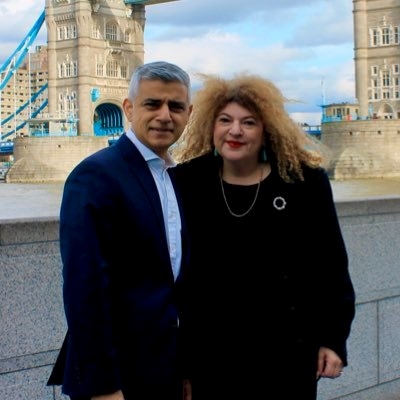
Judith Garfield with mayor Sadiq Khan -Judith joining us via a zoom call 6th May 8pm
Transport for London’s funding package from the government, agreed last week, will allow Londoners to travel safely for the next four-and-a-half months. But for our communities, it will cause added hardship – particularly for our key workers; care workers and those who are already struggling with day-to-day household bills.
The Government has insisted TfL must increase its fares above inflation next year, bringing an end to the four-year fares freeze introduced by the Mayor of London. They have also insisted that the scope and hours of the congestion charge be widened, a suspension of free travel for pensioners during peak hours, and that free bus passes for children be halted entirely. After pressure from the Sadiq Khan, the Government has now agreed to allow disabled Freedom Pass holders to continue travelling for free at all times.
When speaking with residents in Havering and Redbridge earlier this year, before lockdown they want a safe environment without pollution for which reliable, fairly priced and comfortable public transport is central. They should not be exploited by the government through its abuse of our public transport. They did not want to see politics before people and this is precisely what this government has done.
We stayed indoors because it was the right thing to do; we worked from home, maintained social distancing, missed family birthdays, and even paid our respects via videoconference. We are continuing to stay home in a heroic effort to get us past the coronavirus peak and prevent a second wave of the infection, which some of our nearest and dearest wouldn’t survive.
As the hub of COVID-19, we Londoners worked together to reduce the infection rate. The government tells us that we are ‘in this together,’ so why are they punishing us with a bad deal for our public transport? In Havering and Redbridge, this spells further hardship for frontline workers who have already been told not to expect a pay rise any time soon.
The Mayor has been honest with us all – this is a bad deal for London. But it was the only deal the Government were willing to put on the table, and one he had to accept to keep the tubes and buses running.
In 2015, austerity meant TfL lost a yearly £700 million grant from central government. Today, we are the world’s only major capital city with an unsubsidised transport network. All our transportation costs are covered by fares and some devolved business rates, unlike the government subsidised transportation networks in Paris, Seoul, or New York City.
COVID-19 has left a £4 billion hold in Transport for London’s budget this year. Travel on the tube and buses plummeted 95% in the first week of lockdown, representing an equal drop in fare revenue which the government has told TfL to fund its operations with. Whitehall has announced other transport networks in Britain will receive similar funding packages, because they have also suffered the same plunge in operating revenue. Except, they have assured private operators their bailouts will be devoid of the penalties inflicted on TfL. So, why is this government punishing Londoners?
Many of us in Havering and Redbridge rely on public transport to meet our everyday needs and get to work. Our NHS heroes, supermarket staff, refuse collectors, care workers, and cleaners all depend on TfL. Outer London boroughs like Havering and Redbridge are home to the lifeblood of this city and if we want to get through coronavirus ‘together,’ the government needs to stop punishing low-paid Londoners and the residents in Havering and Redbridge.
On Friday, 22nd May the MP for Romford, Andrew Rosindell, published an interesting letter on his socials about the level of illegal crossings taking place in the English Channel. He urged the Home Secretary to ’get a grip on this crisis.’
The letter to the Secretary of State is distasteful and not a true reflection of Romford constituents views. During a global pandemic, where people are dying, I do not believe for second this is a major concern constituents are raising at this time.
Residents across the borough are worried about their health, employment, the risk of children returning to school too soon, the lack of PPE and how they will put food on their table in the coming weeks and months.
Businesses which are largely in the Romford constituency are concerned about the gaps in the packages announced by the government. Many have been locked out of any Government support through the Coronavirus Business Interruption Loan scheme. And do not let me start with the self-employed, contractors or freelancers.
Andrew Rosindell MP should appreciate that businesses are the drivers of growth for our economy, and will be crucial to our recovery from the economic shock caused by Coronavirus. We would rather a letter to the Chancellor to address those concerns and more.
The MP for Romford is hiding behind voters, instead of boldly airing these concerns as his own. Andrew Rosindell should stop using his position to push his right-wing views. For once, I and many, would like to see him make a real and proper representation for the diverse constituency in which he was elected to represent.
Of course we all want to the tip to open as soon as possible. But it has to be done safely and effectively. Havering must not be in the position of opening Gerpins and causing miles of static traffic as happened recently in Manchester.
Social distancing measures need to be set up to adhere to government guidelines. Personal Protective Equipment needs to be available for those working at the site. We need assurances that this will actually happen as we already know that PPE is still not being adequately provided at Queen’s Hospital and our borough’s care homes. We don’t want to put people’s lives at risk, as many thousands have died as a result of the virus in this country already.
Labour wants to see a coordinated approach to a re-opening that will be in line with other London boroughs and Essex County Council. The police need to be able to monitor and supervise this enterprise, as long queues will cause frustration. Possible fly tipping en route to the tip could occur if the public are unable to reach their destination for long periods of time.
We don’t want to see political, petulant point scoring from Havering Tory Leader Damian White that helps no one. We do want Gerpins to open safely for the protection of those working there and the general public.
If those safety measures need more time to be ensured and organised, then we say take the time needed and put people’s lives first.




 the tip to open as soon as possible. But it has to be done safely and effectively. Havering must not be in the position of opening Gerpins and causing miles of static traffic as happened recently in Manchester.
 Havering Fabian Society