Friday 7th February 7.30PM – GUEST SPEAKER JOE DROMEY
Fairkytes is in Billet Lane Hornchurch RM11 1AX, opposite the Queens Theatre. Joe Dromey has been Director of Central London First for almost four years. He previously worked at the Learning and Work Institute and IPPR and served for seven years as a Councillor and Cabinet Member in Lewisham. He will start as Fabian Society General Secretary on 20th January 2025. The Fabian Society is the only think tank affiliated to the Labour Party. The Fabian Society is delighted to announce that Joe Dromey has been appointed as our new General Secretary. Joe comes to the Fabians with a wealth of experience and an in-depth knowledge of the Labour Party and its policy making processes.
Councillor Jane Kean – this is her response to the consolation
I am responding to the Draft Library Strategy 2024-2029 Consultation, as the Labour councillor for the Romford ward of St Alban’s.
Town halls, parish churches, public houses, markets, and local libraries are at the heart of civic life. In the mid-20th century nearly every town, and sizeable village in England boasted a free library. The public provision of a free library was seen as the hallmark of a progressive society where learning was prized as a means of “getting on” socially and economically. Libraries and the learning activities carried out in them contributed directly to the formation of the modern English civic life and culture that many of us grew up and flourished in. It is, therefore, simply bewildering that at a time when we are trying to grow our economy and promote stronger civic values in the younger generation and amongst new immigrants that the council might, if not careful, reduce their opportunities – which in my mind is the only possible outcome if the Council reduces the library estate and service without any firm plan in place to address the remainder of the library estate.
I attended the consultation meetings in Collier Row, Romford and Gidea Park Libraries. There I was forcibly reminded of the role libraries and librarians played in my own personal development. I was an early reader. This was due to the fact that I lived next door to a primary school teacher whose own daughter was a teacher to me. We, family and friends, all regularly visited the Thameside complex in Grays. It was a magical, free, public facility. As well as the theatre, there was also a local history museum and the library. My father studied for his Open University Degree there. While he consulted the academic books in the library, I hung around in the local history museum. It was there I learned Queen Elizabeth 1st’s speech,“ I know I have the body of a weak, feeble woman; but I have the heart and stomach of a king, and a king of England too.” This was her famous address to her troops at Tilbury. A generation later, my mother and father took their grandchildren, my children, to the local children’s section of Upminster library whilst I studied at Essex University. I was given special permission to take books out overnight from the University’s short loan section. Later I poured over examples of risk calculations at the library table in Upminster as part of my Institute of Chartered Secretaries and Administrators course. I held lessons on London history and places of interest in the room above Hornchurch library and my choir Fairlytes Singers met in that same room for singing rehearsals before performing at the Queens Theatre. As a result of polio and childhood sickness and poverty one of my grandmothers was illiterate, so I would say that my family is living proof of the importance of library based learning in the lives of working class people trying to “get on.” It is simply backward to be divesting our communities of libraries which are fundamentally publicly accessible spaces for learning and self- improvement. Every day we are confronted with fake news and scams. Havering residents need support with literacy, numeracy, critical thought and research skills more than ever before.
Since my election in 2022, I have visited Romford Library many times, to attend meetings of the Citizens Advice Havering, to meet with residents when it is evident that the situation demands a quiet, private, safe space so that they can offload their concerns, and more recently to borrow litter picks for my “Litter Pick and Natters”. It has sometimes been necessary to book a table so that I can use my laptop; demand for tables with access to plug sockets for laptops is high. Having visited regularly, I doubt Romford Library has the capacity to absorb library users from Gidea Park and Collier Row especially if it has to do so before its own facilities are improved, expanded, or these libraries are closed simultaneously. The strategy document also raises doubts about the capacity of the remaining libraries to absorb the extra demand.
My concern about the strategy and public consultation is that at no time have I seen how the savings figures break down across the library estate, nor have the costs of making those savings been set out in the consultation document. There will be costs to the council of closing and securing buildings and keeping them empty and it is not clear whether the Council intend to sell the land, or develop it using a vehicle for that purpose. What is clear is that the savings of between £334,613 and £350,855 are relatively small whilst the social and economic cost to Havering though difficult to quantify, will be very high and continue for generations.
CURRENT LIBRARY PROVISION IN ROMFORD:
Within the Romford constituency there are three libraries and they are Romford Main Library (open 50 hours a week) and the two branch libraries of Collier Row and Gidea Park (each open 24 hrs a week). These libraries currently serve the constituency of Romford which had a population of 109,351 in 2021 but this is expected to rise to 119,263 in 2031 which falls just outside the life span of the strategy. Please note that whilst St Alban’s Ward, my ward, does not contain a council library, its population is expected to increase by 34% over this period. No other ward is likely to see the same percentage increase. The Council’s draft strategy does not address the issue of Romford’s population growth over time and this is a serious defect in the strategy.
FLAWED BUSINESS CASE FOR CAPITAL INVESTMENT WITHOUT PLANS FOR ROMFORD MAIN LIBRARY
The strategy and consultation proposes the development of a business case for capital investment in the remaining library estate following the closure of the four unspecified branch library buildings but, other than two lines of text referring to “an options appraisal and business case for a new children’s library”, there are no details of what that capital investment might look like and when it would be sequenced. Based on that, as an elected Romford Labour councillor, I would like to gently and politely ask the Cabinet Member responsible for this strategy to talk to the cabinet member for regeneration. The omission of any reference to the future of Romford’s main library is a significant flaw in the strategy. I am sure the Cabinet Member for Regeneration might be able to advise the Cabinet Member of the reasons why the future of Romford’s main library makes it imperative that the branch libraries in Romford should remain open, including inter alia: –
· Romford’s status as a thriving metropolitan centre.
· Romford’s population is projected to significantly increase as already mentioned.
· The emerging Romford Masterplan will surely make references and spatial provision for the relocation and expansion of the existing library?
· Romford’s library (built in the 1960’s) is in decline.
· There is huge development opportunity in Romford to use Department of Culture Media and Sport grants and community infrastructure contributions to create a cultural quarter bringing together a new children’s learning centre, the local studies and family history service, the museum and the library, funded by revenue generating uses.
· The branch libraries provide scope for alternative library provision should the administration grasp the opportunities that are clearly present.
Instead the Proposed Library Delivery Model plans for the managed reduction of Havering’s branch libraries which in time may prove to be very costly and short sighted.
DEEP AND UNACCEPTABLE CUTS TO ROMFORD BRANCH LIBRARIES AND LIBRARY PROVISION
The Strategy suggests a reduction in the number of library buildings in the borough by four from ten libraries to six libraries. Identified for potential closure are the two Romford branch libraries of Collier Row and Gidea Park (the other branches being South Hornchurch, Harold Wood, Elm Park and Rainham), but uniquely amongst the Havering constituencies of Dagenham and Rainham, and, Upminster and Hornchurch, that could leave Romford with only one main library which would have to serve a population of approximately 119,263 by the end of the strategy’s lifespan. Not only could Romford lose two branch libraries but 48 hours, out of the proposed reduction of 96 hours would be lost to Romford residents. This is simply unacceptable. It is noted that on the horizon is the possible redevelopment of the Gidea Park Library and this might mitigate that loss but as yet that project is in its early stages.
PROPOSED CLOSURE OF COLLIER ROW BRANCH LIBRARY – UNENLIGHTENED AND COSTLY
There is no world in which it would be right to close the Collier Row branch Library. Yes, the branch library is in poor condition. It was earmarked for closure back in 2019. However, it was given a reprieve because of its importance to the communities that comprise the wards of Havering-atte-bower and Mawneys. I understand it was hoped that an army of volunteers would help run the service. Volunteers did come forward but it is likely that efforts to bolster the service with volunteer help were undermined by the Covid19 pandemic.
The Collier Row library serves two Romford wards, Havering-atte-Bower and Mawneys. Both wards contain a population which is below the English average in terms of educational attainment. 23.3% of residents in Havering-atte-Bower, and 21.5% of residents in Mawneys, over the age of 16 have no qualifications. The English Average is 18.1%. Rather shockingly for a Borough whose Leader has been championing proposals to host and develop Europe’s largest data centre only 5 wards out of the 20 Havering Wards meet that average, or have better educational attainment than the English average. It therefore makes no sense for the council to be reducing the library learning opportunities available to the Borough’s children to improve their knowledge and skills. Skills are on the new Labour Government’s agenda. Whilst the residents in Heaton and Gooshays top the list of most educationally challenged wards, they will continue to have access to the Harold Hill Community Hub which is right. Romford’s children will suffer by comparison.
At the library consultation meetings strong concerns were expressed about the proposed closure of Collier Row branch library because it serves Havering’s rural hinterland and it does not have great transport links to Romford. Collier Row is furthest away from any other nearby library (page 97) when it is closed, its users will be forced to travel by car, bus, bike or on foot into Romford to use the main library. 18.7% of Havering-atte-bowers population and 19.4% of Mawneys’ population do not own a car or van. Residents in these wards would therefore have to walk, cycle or take a bus to Romford to use the main library. The journey times to Romford Library would far exceed current journey times. More concerning, is that fact that at the consultation meetings, the view was expressed repeatedly (and a little unreasonably in my opinion) that Romford was not a popular destination for many residents; an unknown number of older drivers would probably stop using library services because they find negotiating the A12 daunting and the parking costs in Romford’s car parks prohibitive. Additionally, local children from the many local primary schools would not be able to walk to a library escorted by teachers or independently travel because of the perceived risks. Since Collier Row also serves a catchment area with relatively high numbers of children living in poverty it begs the question where will these children go for learning enrichment? Just opening a room in the already booked full to capacity local Community Centres will not address their specific learning needs, it is the skilled human resource in the form of professional library officer that will make a qualitative difference to their lives.
GIDEA PARK LIBRARY AND THE BALGORES SPECIAL SCHOOL
On 8th November 2023 Council approved the commencement of a procurement process for the Balgores Special School, a project that aims to establish in Gidea Park a 300-place special school for children and young people, next to the existing Gidea Park Library, that may be demolished and reconstructed as part of that project. The emerging plans for this proposed school are not referred to in the library strategy. Of course the planning process is far from certain in terms of timing and outcome so that is understandable. It is, therefore, to the general principle of closing the Gidea Park Library before the outcome of that process is known that this part of my email refers. I would like to urge the Cabinet Member for Young People, and Cabinet Member for Digital Transformation and Customer Services, to give serious consideration to the sequencing of the project so that Gidea Park is not left without its valued local library service.
Gidea Park library is loved and used by local residents. Evidence of its place at the heart of the community can be seen from the elaborate murals decorating its walls, to the fine displays of reading scheme books in its children’s section. Attendees of the consultation meetings were left in no doubt of the thought and effort that has gone into making it a warm and welcoming place for local children even if maintenance of the building has not kept pace with that aspiration. It surprises me given the aspiration that resides in its well educated residents that there has been very little capital investment in the library facilities.
Gidea Park branch library does not have the same captive market for its services that Collier Row library has, being nearer to Romford main library. However, it is almost as equally popular as Collier Row, judging from the number of visits to the library and this popularity and affluence should have been a reason to invest in its facilities to create a revenue stream that would have offset its annual running costs. What the Cabinet Member for Digital Transformation and Customer Services should be aware of is that Gidea Park has recently lost two banks and two popular butchers shop. Mindful of the emerging plans for the special school, cabinet members might wish to note that should this library be cut and/or closed prematurely there will be an adverse impact on businesses nearby. In the meantime, is there an opportunity to work with the high street banks to offer a banking or post office hub here?
TECHNOLOGY
Much is made within the strategy of the role that technology could play in mitigating the harm of closing four of Havering’s branch libraries. However, technology will not help those who do not have access to computers or tablets and they are mainly the old, the poor and those with disabilities. Nor is technology fool proof and a substitute for a professional librarian. As Neil Gaiman wittily said, “Google can bring you back 100,000 answers, a librarian can bring you back the right one.”
PRICELESS CONTRIBUTION OF THE LIBRARY SERVICE
In bringing this emailed response to the consultation to a close, I thought it important to acknowledge the significant contribution Library staff have made to the mental health and well-being of residents. Residents in the Borough were hit hard by the deprivation of friends and family during Covid19. Hornchurch main library became a vaccination centre. As Havering came out of the pandemic, librarians worked hard to attract back lost visitors. However, libraries soon became houses of hope as they adapted their facilities to meet the physical needs of those seeking warmth and shelter during the worst cost of living crisis in decades. It would be impossible to put a price tag on the contributions that librarians have made but one way of repaying that service would be for the administration to flesh out the missing parts of the library provision jigsaw so far as the future of Romford Main Library and Gidea Park Branch Library are concerned. Then the administration should task its officers with putting its capital to work more efficiently to attract grants for capital investment that would generate new revenue income and reduce library running costs through improved energy efficiency.
Thank you for taking the time and trouble to read this response to your consultation. I hope to receive an acknowledgement and response to my comments in due course.
This article is part of a series covering the Fabian New Year Conference, written by Dave Baldock and Sue Watson
The Panel consisted of: – Emily Thornberry MP, Shadow Attorney General for England, and Wales
Jason Towse, Managing Director of Business Services at Mitie.
Kate Green OBE, Greater Manchester Deputy Mayor for Policing, Crime and Criminal Justice.
Cllr Natasha Ennin, Cabinet Member for Community Safety, Southwark Council
Chair Vikram Dodd, Police and Crime correspondent at the Guardian.
Emily started her presentation by stating the left should never have conceded Law and order to the right. She expanded by saying the Tories are pretending the problem crime no longer exists. Labour’s document, Make Britain’s Street Safe, sets out their vision around dealing with crime. Emily acknowledged the damage done with people perceiving there are no outcomes or consequences for crimes committed.
Emily informed the meeting she has three priorities for action as soon as she is in office.
Crimes that make people afraid to go out, Anti-Social Behaviours including street theft and petty shoplifting included here. More police will be visible on the streets, hot spot patrolling will be increased, as well as removing the under £200 shoplifting leading to no police attending. There would also be work undertaken with schools and youth clubs.
Fraud-approximately £219billion was lost through fraud up to June 2023. This equates to the whole NHS budget and a further ¼ on top. 3.7million people have been victims of fraud last year (2023). Forty percent of crime is fraud. Emily pointed out the Tories do not include fraud in their crime statistics. Labour would reclaim monies lost as a result of PPE fraud People are 200times more likely to be a victim of crime than go to jail. Emily was clear that this is going to change once Labour is in power.
Violence against Women and Girls (VAWG) Emily pointed out currently approximately 2% of reported VAWG go forward to conviction. The word “epidemic” was used to describe the level of incidents; however, it was acknowledged there is a small chance of prosecution and conviction. Emily is looking to initially cut VAWG by half. Work would be undertaken in schools, work places, homes, leisure venues, everywhere.
Jason spoke of the pressure on police calling this “stretch.” He expanded on how a collaborative approach between the police and private sector could help here. He pointed out retail is seeing a rise in crime, with some extreme violent examples. Organised Crime Groups (OCGs) have used hammers, knives, packs of dogs and baseball bats during their crimes. He stated £10million would be needed to combat retail crime in London. Private security firms, such as Mitie, track OCGs across the UK, so this could feed into policework. Pegasus has been launched to combat retail crime. Regarding terrorism Jason asked for legislative reform to protect where we work, socialise and play.
Kate reminded the meeting the levels of crime are a result of 14years of Tory underfunding. The potential negative impact on local policing of abstractions raised. Greater Manchester actively works to minimize abstracting Safer Neighbourhood Team officers to maintain good local policing levels/activity. Kate called for three things from Labour around policing.
The police funding formula-Labour needs to recognise the pressures police forces are under and respond appropriately.
McPherson mark2 and challenge institutional racism.
Invest in effective community penalties. These are cost effective and have better impacts around reoffending. Further it allows the offender to carry on working and maintaining family life.
Natasha spoke of fear being normalized. The impact of ASB, gangs, knife crime, drug use, sexual harassment all feed into the fear. Cuts to police funding have impacted on crime. Natasha stated there are 10,000 fewer police officers from 2010 levels. Statistics show a 40% drop in theft arrests and arrests for rape are “shockingly low”. Southwalk had 2500 incident a day this year to date. She raised a point around the number of police officers within the ranks that should not be there. To add further pressure to criminal justice generally, the courts, police and Crown Prosecution Service are all overwhelmed with massive backlogs Natasha commented that the probation service has effectively collapsed and needs a long-term plan to fix it. Natasha pointed out there are 400,000 private security officers in the UK. She proposed these individuals could play a role. The importance of neighbourhood policing with an ambition no abstractions should form part of what Labour would do to reduce local crimes.
Emily commented that fraud needs a level of expertise in those investigating. This would include investigating phone and banking fraud. She emphasized that Labour would work with banks, phone companies and social media companies to bring about change. An example given was to stop the sale of British telephone numbers overseas.
A suggestion from the floor was no incarceration without education. Further comments from the floor included the need to reform what happens in prisons and how to link to schools to show prison is not a “glamorous” outcome to crime. A focus on prevention was also shared.
This article is part of a series covering the Fabian New Year Conference , written by Dave Baldock and Sue Watson
Keynote speech – Barbara Nowacka, President of Inicjatywa Polska and Minister for Education
International Address – Pedro Silva Pereira, Portuguese MEP, Vice-President of the European Parliament
Miguel Costa Matos MP, Member of the Portuguese Assembly of the Republic
The final session featured three European politicians giving a wider perspective of how events in Europe were impacting on them.
Barbara is an MP for the newly formed Polish government and began the session with an overview of the recent election. The 2023 elections were important and gave Poland a choice between getting closer to the EU or Russia. With around three million refugees from Ukraine, Poland has much to contend with.
The previous Law and Justice regime were a right-wing populist government, playing on Poland’s catholic heritage to limit socially progressive policies. They had been in power for eight years. They were authoritarian in nature, did not respect the rule of law and had restricted abortion. The government determined what was taught in schools and had ensured public TV was like the Russian “Pravda” model.
To defeat them, there was a wide coalition of the three main opposition parties, not ideal but necessary to ensure Poland remained a pro EU nation and continued to support Ukraine. The coalition engaged with civil society and groups that had suffered under the regime – there were many of these as Law and Justice was anti-abortion, and unsupportive of the LGBT community. A six-week long protest in schools had ended without success but had not been forgotten by the teachers involved.
The three main opposition groups, Civic Coalition, Third Way, and New Left, took 54% of the votes, winning enough seats to allow them to take power. According to the final vote count by the National Electoral Commission, Law and Justice won 194 seats, the Civic Coalition 157, the Third Way 65, The L eft 26, and the Confederation Liberty and Independence 18
The coalition had come together and had held since the election, with ongoing campaigns to build a common future and deal with the corruption of the previous regime. Poland had many refugees and was aware of the brutality of the Russian government.
The new Government was led by Donald Tusk, who was well known across Europe and helped ensure Poland remained pro EU and not under Russian influence.
Pedro Silva Pereira appeared via video link and gave greetings from the European Parliament. Britain, while outside the EU, had several common issues and continued to work with the EU to address these.
Miguel Costa Matos was part of the Socialist government in Portugal. Governments of the left are rare in Europe at present, and he was pleased to be able to talk on how the Government was making progress on a range of issues. An election was due in March 2024.
An interesting session and a reminder that many of the Countries in Europe have similar issues to the UK, Poland is more effected by the war in Ukraine, and Russian influence remains.
This article is part of a series covering the Fabian New Year Conference , written by Dave Baldock and Sue Watson
Panel consisted of: – Abena Oppong-Asare MP, Shadow Minister for Mental Health.
Anita Charlesworth CBE, Director of Research and the REAL Centre at the Health Foundation.
Dr Sonia Adesara, NHS Doctor and Activist
Andrew Harrop, General Secretary of the Fabian Society.
Chair: Cathleen Clarke Business Manager at Labour List.
Abena opened the session by stating previously the Fabians made it clear poverty is not a choice and called for socialized medicine and a national service. Fabians drafted the NHS Bill in 1945 that led the Labour Government of Attlee, to introducing our NHS. A medical service based on clinical need not payment, a medical service free at the point of delivery and this needs to be fought for. However, she acknowledged the NHS needs radical reform with prevention as the watchword.
The Wanless report details how prevention not only would increase the health outcomes for individuals/groups, but would potentially save the NHS significant amounts of money and add to the economy with less days lost to sickness. An additional factor could be satisfaction with the NHS. 2001-2010 it stood at 70%, today it stands at 29%.
Approximately 1million people have died prematurely in the last decade due to poverty, covid and the inequality that poverty brings. Abena informed the meeting Labour will address health inequalities and look to increase life expectancy. This will feature in their manifesto as in 1945.
A further issue was why Labour will introduce supervised teeth brushing at school, with one of the benefits being fewer hospital appointments for children to have teeth removed. This is a prevention better than cure initiative.
Mental health is now a national emergency. The Fabians understand health cannot be treated in isolation from all the impacts on and of society. Labour has asked Luciana Berger to ensure mental health is included in all policies. Labour will cut waiting lists for mental health support, introduce specialist support in schools and develop mental health hubs to provide advice and support.
Abena referenced the Black report in that poverty is the chief cause of disease. The example of black maternal health outcomes, particularly in childbirth, where mortality is higher than other ethnic groups. Labour plan on recruiting more midwives and health care workers, along with reviewing training.
Andrew informed the meeting Wes Streeting, Shadow Health and Social Care minister, asked the Fabians to review the care sector and think through a National Care Service. Issues explored include a new national workforce settlement, a national service type approach with. national responsibilities and a responsibility for finance and standards within the care workforce. It was felt the geographic disparity had to be ended and a move from a market-based fragmentary system to a National Care Service would help here. It should be for everyone and not as currently with the public sector ‘holding the hands’ of those that need care. It was also recognised a long-term financial commitment would be needed.
Anita shared concerns around rising obesity levels and the rise of those with mental health needs. She also pointed out how women’s health is falling in inner cities. The importance of prevention in improving the health of the nation along with potential positive impacts for the NHS explored. However, Anita pointed out spending on prevention has been cut by a quarter over the last 10years. She was clear that prevention is a form of investment and that it may be necessary to legislate for a spending commitment. Anita felt spending on primary care is critical as an economic, social justice and equality issue. Reviewing this area of spending was seen as a priority as 2.5million more are living with chronic illnesses in the UK. The need to modernize the NHS by investing in the buildings, facilities and new technologies would further drive improvements in the NHS.
Sonia pointed out the UK has one of the highest asthma mortality rates in the young in Europe. Poverty, damp housing and malnourishment can lead to a young person being 2 ½ times more likely to be admitted with asthma to hospital. She called for Labour to be bold and look at legislation to improve the social drivers of health inequality She called on Labour to make hope possible rather than despair a reality.
Points from the floor included the need for wellbeing to run cross government and through all policies. Labour looking at deals struck with pharmaceutical companies to maximize best deals. Look at Sure Start type provisions as part of preventative work linked to a child health action plan that has tangible positive outcomes. The importance of resilience within the NHS is seen as part of eradicating health inequalities.
This article is part of a series covering the Fabian New Year Conference , written by Dave Baldock and Sue Watson
Panel consisted of: – Anneliese Dodds MP, Shadow Secretary of State for Women and Equalities.
Cllr Catherine Fookes, PPC for Monmouthshire.
Cllr Anya Sizer, Speaker of Hackney Council
Dr. Liz Hind, Secretary of Fabian Women’s Network
Chair:Cllr Marianna Masters, Chair of Fabian Women’s Network.
Annelise Dodds opened the session by emphasising 2024 is a pivotal year for the UK. She stated this could be the year where the country turns the page on division, on inequality. Where cruel barriers are removed. Annelise pointed out the gender pay gap is rising, online misogyny is rising, delays in court cases/actions are rising; that groups that put so much into society are getting so little out. This, she said, has to change.
Economic growth must include all with equalities running through all of Labour’s policies.
Approximately $34billion is the cost to the economy of inequality. An example given was the impact of menopause. Labour will expect the workplace to have a menopause action plan. The estimate is approximately an additional £11billion to the economy if menopause support is in place. The pressure on family life was discussed with the economic along with societal impacts shared. Labour would ban zero-hour contracts and look to the use of flexible contracts.
Approximately £20billion would be added to the economy by closing the ethnic minority employment gap. For those with a disability, too many are on or below the breadline. Labour would bring in an expectation that disability pay gap would be reported. A range of suggested adaptations were shared. By lowering the pay gap for disabled workers by 2% this would add £3billion to the economy.
Annaliese called time on old ways of dividing people, on bluster, on failure and bravado and called for a government based in the Fabian tradition of evidence based practice.
This was followed by Cllr Sizer-she discussed how SEND children and young people are treated, particularly neurodiverse individuals. This, she sees, is a litmus test of who we, as a society are. The parent experience is of barriers faced at every turn. Evidence has shown mothers of teenagers with ASD exhibit the same stress as combat soldiers. Depression amongst parents is high too. There are financial and practical implications for parents too. There is a need for a change where parents/carers thrive not just survive. She pointed out the Governments recent SEND plan is simplistic and not working. Cllr Sizer called for Labour to introduce policies where SEND and trauma informed practices are embedded throughout all policies. The SEND “black hole” in council budgets and why was acknowledged however it was stated that there is a need for whole system change where there is a whole family focus on mental health, where there are parent coaching opportunities. This would be economically sound practice as well as emotionally literate.
Cllr Fookes spoke of Barbara Castle and Harriet Harman and the Acts these women brought into law. She then raised the issue of childcare and how the majority of unpaid care was undertaken by women. Wales provides 30 hours childcare for all 3-4year olds. 2.5% of GDP is invested in childcare.
A further issue she raised was around ending health inequalities for women. Cllr Fookes closed her speech by calling for 50/50 representation and leadership within the Labour party, the cabinet and parliament itself. Currently women make up 35% of parliament. Gender parity in parliament could be a quick win for an incoming Labour government.
Dr Hind spoke next re gender responsive budgeting work she has undertaken for OECD. Further this work has included how to embed this within public services. She stated 9% can be added to growth in the economy, if gender responsive budgeting is adopted. She stated that men are not the default that women diverse from, that economies are people.
There was a question from the floor about those leaving care and how they are catered for. There was a question as to if leaving care should be a protected characteristic under the Equalities Act.
A further question around the role for procurement when agreeing contracts, in supporting and enabling disabled workers was also posed.
Annaliese replied that the New Deal for Working People will help all. So many aspects of the 2010 Equality Act are not being used and Labour will use this Act more effectively. Additionally, she pointed out the Government’s disabled people strategy has been ruled illegal as they did not speak to disabled groups. Labour will engage with community groups to ensure the voices of people are heard by Labour. Labour will be the government of all not just some.
This article is part of a series covering the Fabian New Year Conference , written by Dave Baldock and Sue Watson
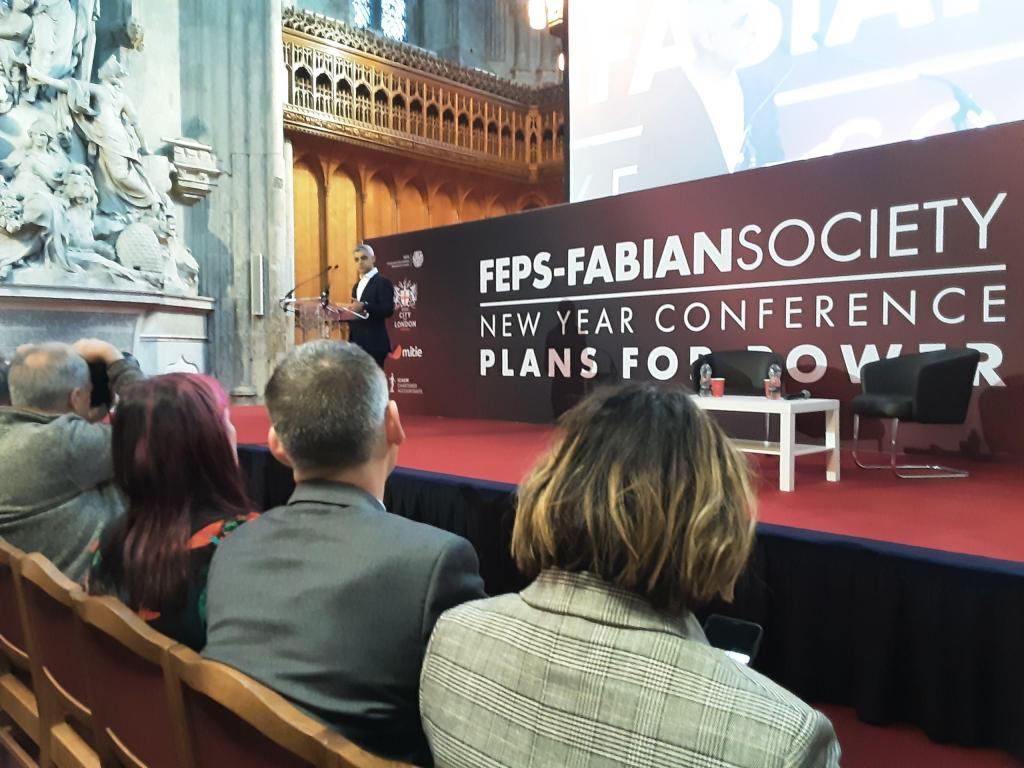
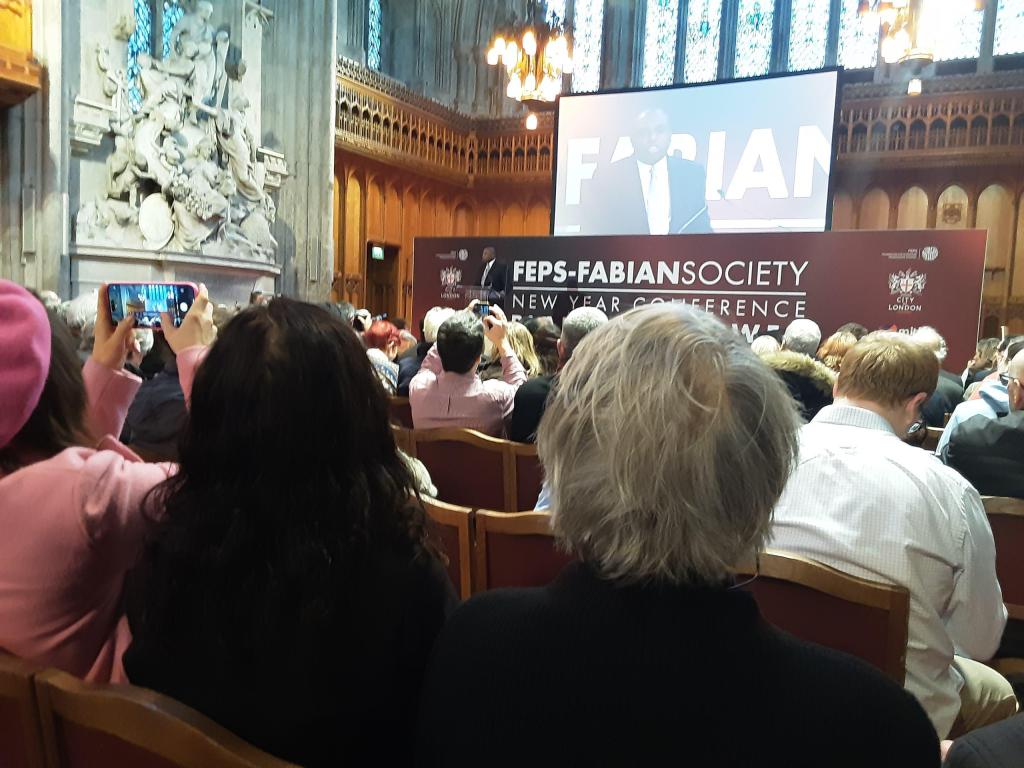
Opening Comments
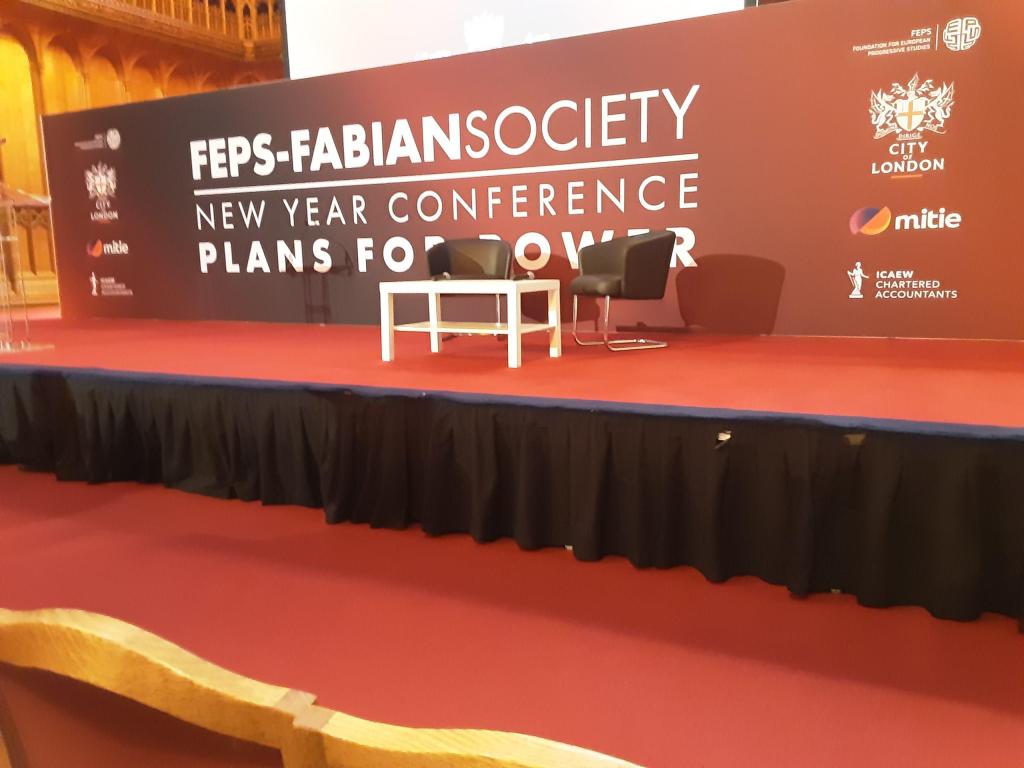
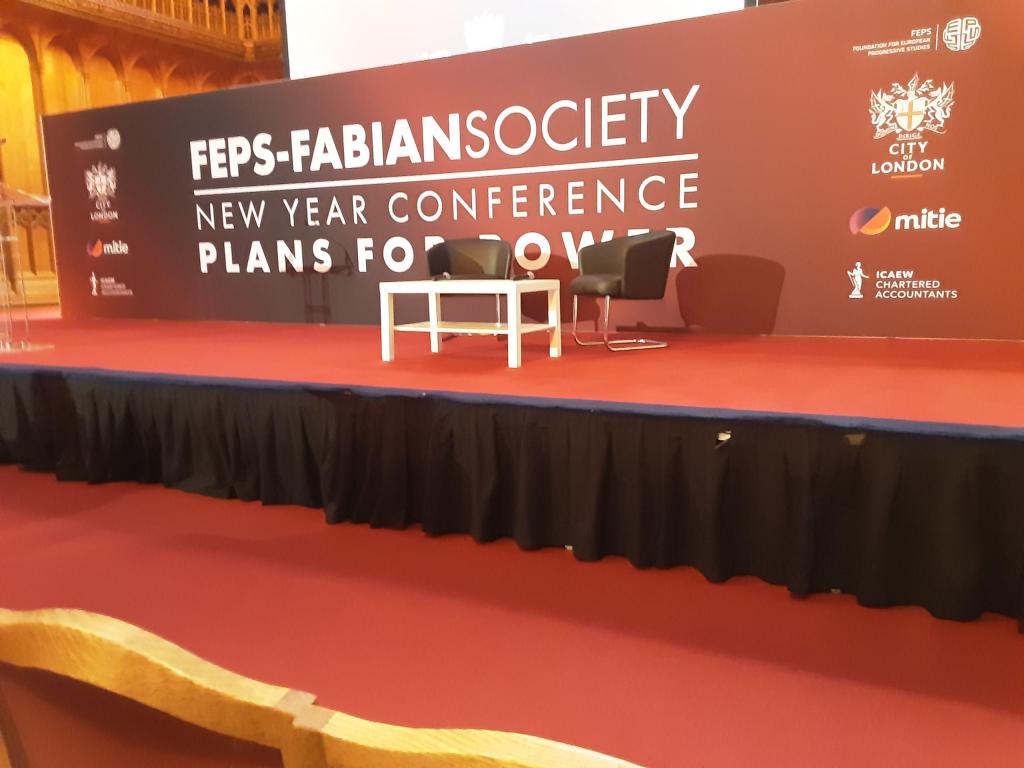
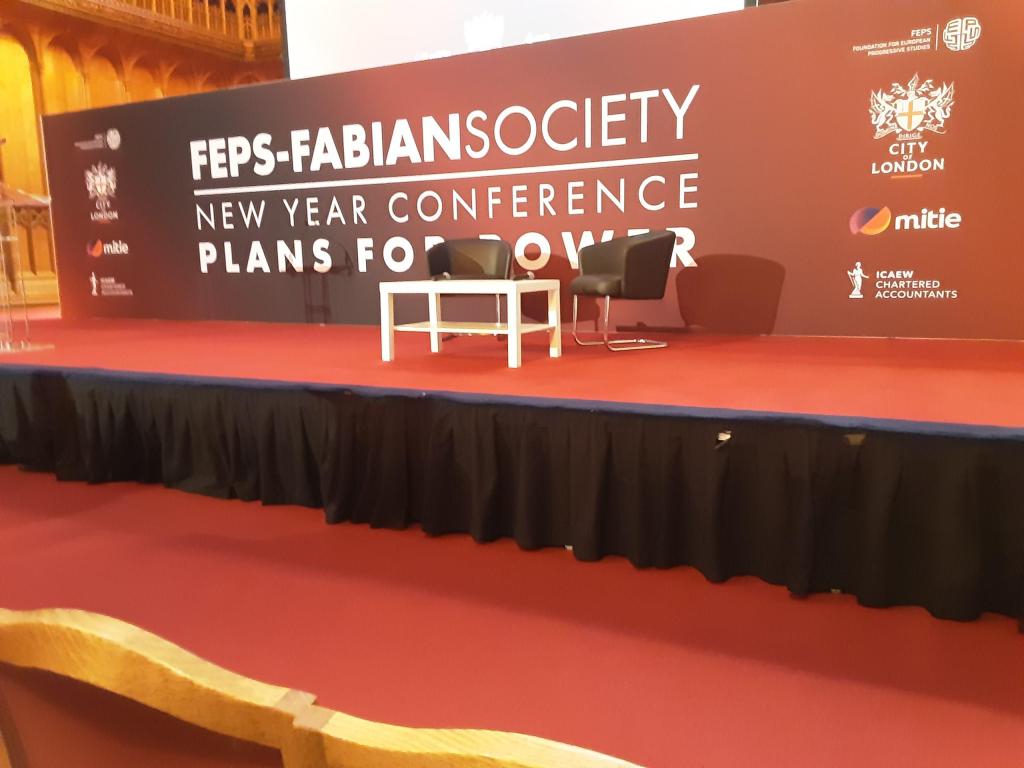
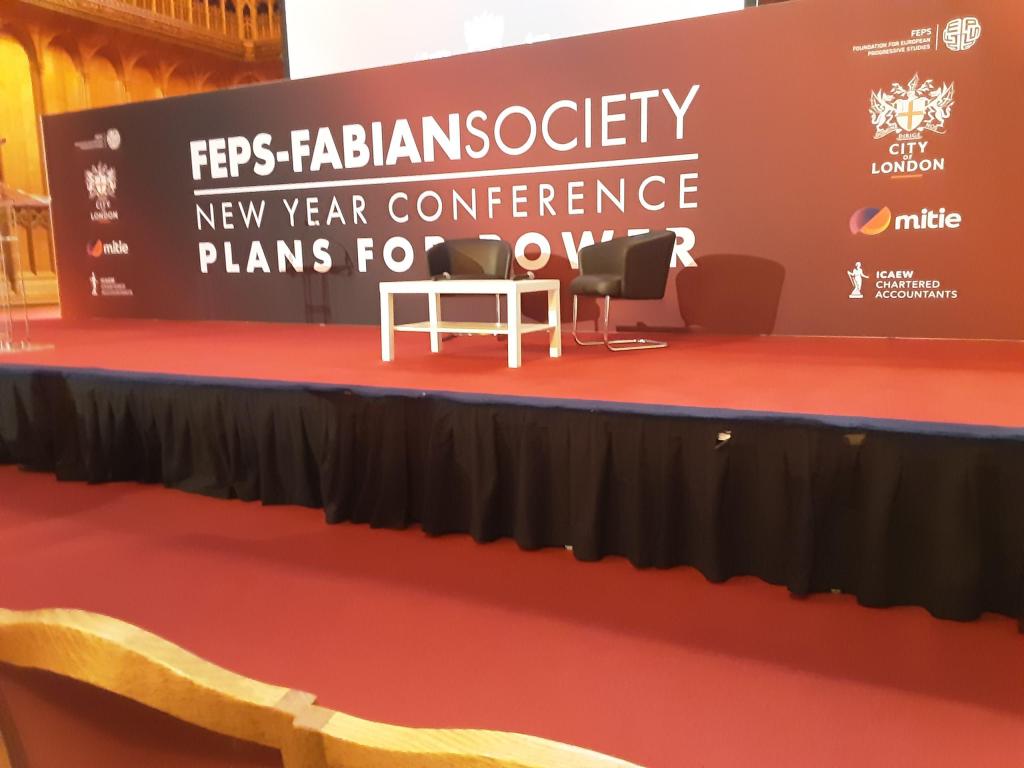
The event, held in The Guildhall, was opened by the General Secretary of the Fabians, Andrew Harrop. He informed the meeting it was the 140th year of the Fabians and gave an overview of the significant input to policies and politics the organization has had. He ended his opening comments by looking for a Labour government to win the 2024 election for the good of the country.
He was followed by a representative from the City of London Corporation. He spoke of the history of Labour. An example of how the Fabians have worked with and impacted on Labour policy was, thirty years ago the Fabians proposed making the Bank of England independent. Gordon Brown introduced this idea.
Then what is needed, he outlined three key areas with the importance of each touched on.
Economic growth/business growth
Financial and professional services
Government, businesses and the third sector are working together to solve problems both nationally and internationally.
The Fabians chair then introduced the first Keynote speaker and looked to welcoming in a Fabiantastic Labour government.
Keynote Speaker- Mayor of London Sadiq Khan
Sadiq opened his address by wishing the Fabians a happy 140th birthday and that he is looking for City Hall, the Government and the Great Offices of power all held by Labour and the think tank that is the Fabians. He said imagine what a Labour mayor working with a Labour government could achieve for London and the whole country.
He then expanded on his overall theme of universalism. Sadiq sees this as defining society through the values held by that society. Values would be similar, and all would work together for the good of the society they are part of. This includes elements such as a living wage, secure livelihoods for all and how older and disabled members of the society are enabled.
A further example of universalism championed by early Fabians, was the concept of good nutrition for all children and the positive impact that has. The continuation of the free school meals for all Primary aged children was shared with the meeting. Sadiq commented that education is the great leveler.
Sadiq was clear that economic competency will lead to social justice. With ULEZ he sees this as a green issue, a racial and social justice issue as well as leading to health improvement, particularly for children.
Re Brexit he ran through some of the economic costs to London, the cultural, educational and social costs. There is also a skill and labour shortage. Sadiq gave the figure of approximately £30billion as the cost to the economy of London. He stated a closer relationship with the European Union, as per David Lammy’s stance, would work to reduce the impact.
He shared that there is a rise in crime and anti-social behaviors, highlighting the feelings this gives rise to. However, he linked this to the loss of youth clubs/facilities, youth workers and cuts to the police. Sadiq acknowledged the work Yvette Cooper is undertaking working with communities to bring about progress.
He also touched on the Gaza/Palestinian/Israel situation. Sadiq was clear that a ceasefire is needed, Netanyahu is “roadblock to peace” and a two-state solution could provide the peace and stability the region needs.
Sadiq closed his speech by saying politicians either play on people’s fears or listen and addresses those fears. He reiterated imagine what a Labour Mayor working with a Labour Government could achieve, stating Britain is at its best when Labour is at its best.
This article is part of a series covering the Fabian New Year Conference , written by Dave Baldock and Sue Watson
David started by thanking the Fabian Society for the invitation. During the speech he was interrupted several times by protestors over the Labour approach to the war Gaza and Israel’s aggression. The disruption attracted coverage in the national media.
The General Election gave the Country a change option between Labour and the Conservatives. Labour offered green jobs and protection for the planet.
The Government was proposing to break international law with the Rwanda scheme. The rule of law is fundamental and doing this sets a dangerous precedent.
Labour would reconnect and restore the UK’s influence in the world. There were bleak issues to deal with – Ukraine and Gaza were worrying but there is a rising threat of military power and neglect of Human Rights
The older rules-based order is eroding with great power rivalry causing tension. Institutions such as the United Nations are not valued, and with the climate in crisis the influence of government is being reigned back. Mounting disorder does not help address climate issues as there is a lack of co-ordination.at Government level.
After the first interruption, David resumed.
Labour wants a sustainable cease fire in Gaza.
Change will be brought about by Labour in power not by protest. Labour in government will have more ability to achieve this.
David Lammy’s recent Fabian pamphlet sets out a vision reconnecting Britain to the world[1].
This advocated “progressive realism” – equality, rule of law, internationalism.
We must deal with the world as it is, not as we would wish it to be. This continues the realism of Bevin, the architect of NATO, and the principled foreign policy advocated by Robin Cook.
Bevin saw things as they were. He was not a fan of Stalin and would not be a fan of Putin. He advocated the nuclear deterrent and standing up to dictators. He had faults, particularly views on the empire.
Robin Cook had conviction and principles. The response of the Labour government to Kosova reflected this.
Labour needs to operate in the real world of Bevin and apply the idealism of Cook.
The new world disorder is changing lives with more conflicts. Gaza had seen thousands of innocent people killed. Eighty-five per cent of the population were refugees, and there were still over a hundred hostages.
The position was intolerable, and Lammy called for a sustainable cease fire. He had been to the Middle East four time, and each time there was a fear of escalation. Israel and Hizballah were close to conflict. The conflict had expanded to the Red Sea which was threatening food prices. So, closing the Red Sea would have significant CONSEQUENCES.
Preventative diplomacy is needed, one of Britain’s strengths. In its approach to Israel and Palestine the UK had seen a decade of indifference. It is important not to sleepwalk in to despair.
The Israeli PM was morally wrong to reject a Palestinian state. Israel must change. Under a Labour government the UK will collaborate with partners to recognise Palestine as part of a move to peace,
Russia has chosen war in Ukraine and was now aligned with Iran and North Korea.
Soth Korea had provided more shells to Ukraine than Europe. There needs to be a long-term response and a pathway to Ukraine NATO membership.
This is progressive realism.
The climate is a longer-term issue. The COP approach has made progress, albeit too slowly. We should not lose perspective After Paris 2015, the rise in temperature was forecast to rise by 3.5 degrees, now the projection is 2 degrees. So, progress has been made. The expenditure on clean energy id now doubles that on fossil fuels.
The UK can set an example. Labour is committed to ending new licences in the North Sea. There is a need to build on “securenomics” to build and protect green markets.
We are living through a crisis and if and when Labour returns to Government the eyes of the world will be on us.
The aim of Government is to keep people secure, and the planet protected. Neither is guaranteed and Labour needs to rise to the challenge.
This article is part of a series covering the Fabian New Year Conference , written by Dave Baldock and Sue Watson
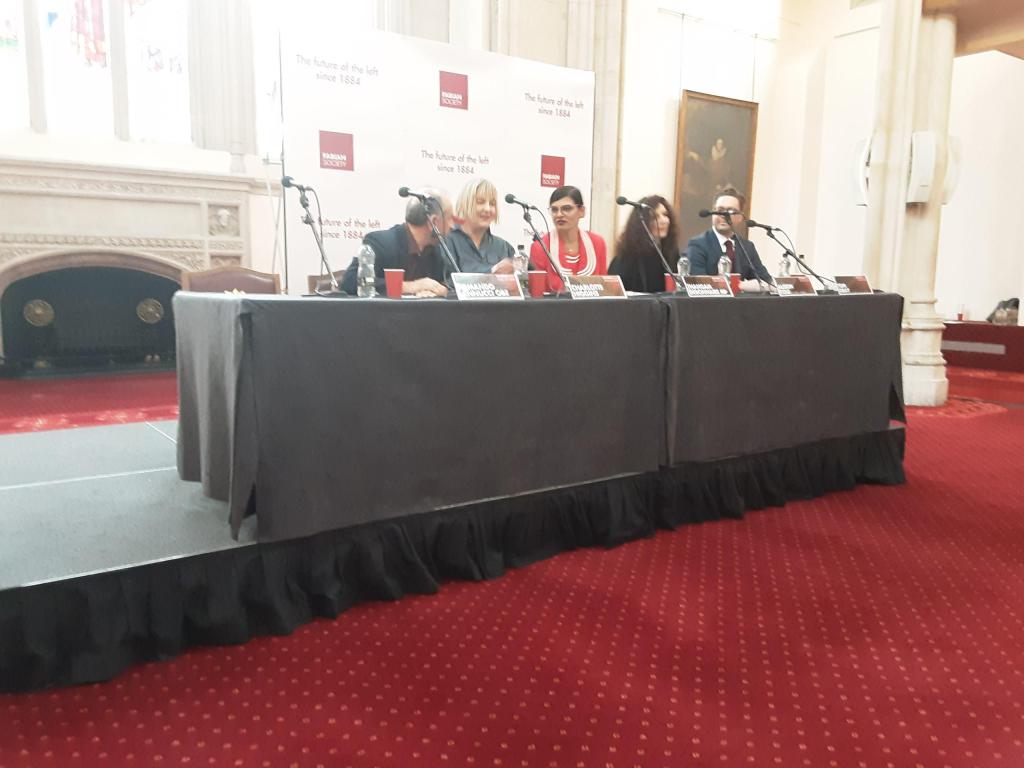
Thangam Debonnaire MP, Shadow Secretary of State for Digital, Culture, Media, and Sport
Armando Iannucci, Satirist and Writer
Tom Gray, PPC for Brighton Pavilion
Alison Cole, Director of Fabian Society Arts and Creative Industries Policy Unit
Chair: Charlotte Higgins, Chief Culture Writer at The Guardian
Thangam opened the panel discussion. The National Lottery had had a very positive effect in providing funding for the arts. There were new arts facilities throughout the country, generating a pride in both those establishments themselves and in the events that have been put on. This was all round a good thing.
The advent of austerity in 2010 reduced the level of government support for the arts and culture. Further reductions have resulted from the cutbacks in local authority budgets. More recently, the combined impact of COVID, inflation and Brexit have all helped to remove funds from the sector because of which many parts of it are struggling for survival.
Thangam believed storytelling is important in establishing a narrative of how to proceed. Under the Attlee Government, Jenny Lee had produced a White Paper on policy in the arts. This placed arts at the centre of policy making, and not remote from the population. Such an approach is still relevant and follows on from the creation of the Arts Council by the Labour government in 1946. Her approach to the Open University in 1969 followed a similar approach.
Where we are now is similar to the incoming problems facing the Labour government in 1964. The arts are under attack and has not been viewed seriously. There have been twelve Secretaries of State over the past Fourteen years. The Arts Council faced a reduction of a quarter of its funding in the period between the 2010 and 2015 elections. The reduction to the budget without thinking about the consequences has led to severe problems for the sector and has had a damaging effect on the Country.
.
Harold Wilson had been the first Prime Minister to have a Minister for the Arts and that was Jenny Lee. Lee had begun establishing the essential infrastructure that is a component of making sure that art the arts operate properly. The arts are for everyone they are important and all should be able to share in them.
It is important to value the whole ecosystem and do not want divergence between various parts of the industries based on their perceived inherent superiority.
Addressing the issues relating to arts and culture is integral part of the economic growth process. The sector is so large (see Armando Iannucci comments below) it is important economically[1].
If art becomes regarded as elitist, then its i’s being presented correctly.
The European Community still matters. One of the initial impacts was to make life difficult for UK musicians to work in Europe. The importance of having remuneration in place for artists and royalties on a common basis across Europe is an issue that needs addressing.
Cultural Education is important for the opportunities it creates for self-enrichment and subsequent employment.
Diversity and inclusion matter as they make for better art, more perspectives and draw on everyone’s talents. Arts and Culture therefore have a key role in national renewal.
There are sources of funding available to the arts that do not necessarily come from direct government subsidy Thangam was of the view that these should be explored to the full and that there were many private sector organisations willing to provide funding if they knew there was some coherence towards overall government policy in this area.
For example, the Film Tax Credit has led to many films being made in the United Kingdom.
Armando Iannucci spoke next. Arts has become increasingly relevant economically as the creative industries make up 6% of GDP worth £115 billion with around two million employees so the area needs to be treated with respect[2].
For example, the relocation of the English National Opera to Manchester was done as a cost cutting exercise and did not look at the needs of Manchester and London as regarding opera in general. The move was a mean decision done purely to save costs and, in the end, may result in the decimation of a part of an important sector of the industry, which as a result regards such moves as being treated with contempt. For example, Angela Rayner had been subject to much adverse comment from the right-wing press for going to Glyndebourne- why shouldn’t she?
Alison Cole spoke next and pointed out the scope for a cross departmental approach towards arts and culture making them part of Labour’s five missions. The arts belong to everybody and are central to education. in particular primary education we should include arts that are more than painting and drawing.
Two other areas to consider where there could be more additional funding this include the lottery tax relief another under used funding pots for example the unspent element of the levelling up fund.
Creative education is a supply side issue with a number of novel things can be done for example pairing together schools and arts organisation and creating the links between the two. Providing arts as part of breakfast club provision is another potential area of activity.
Arts is important and the Tories know that- arts are very well funded within the public-school sector.
Tom Grey spoke last, there is a tension within the commercial market for music and the need to ensure that musicians are paid a reasonable amount. Britain has an established sector that generate generates significant funds from the international market. At present, the Royalty regime is making this increasingly difficult as the regulations needed to deal with this are out of date with the new way in which people tend to consume music (streaming as opposed to physically purchasing something with the music on) which most of the regulations that are currently in place relate to
As well as commercial aspects to music it is good for health, good for mental health and has been shown to be particularly useful for people with dementia in keeping them involved with their families that bit longer.
The music industry has been a vehicle for social mobility. For this to remain the case, musicians need to be able to have an income in enables them to subsist and should not be seen as a cheap option. When people use musicians for events, they need to be paid rather than to be expected to work at sub market pay levels.
Eventually there will be a need for a National Strategy for Music
Although this will not be the number one priority for Labour when elected, it is one of those things that within the Arts and Culture department may well come to the fore later.
Another suggestion would be a United Kingdom music export office to assist. As Thangam had mentioned, there are issues with musicians getting visas necessary to work abroad as part of the Brexit settlement.
A copyright framework is required that enables musicians to be able to market and sell their talent in a way that provides some rewards. At present this is something that is a problem.
The United Kingdom understands music and culture and acts accordingly. It would be a safer place to live creating a creative pathway for children and being able to sustain them to work as musicians on an ongoing basis.
Questions from the audience began with a plea from the museum sector for more funding. The current funding was inadequate to maintain the level of activity at its current level with buildings in decay and the necessary requirement to maintain the exhibits also under pressure.
Section 114 notices[3] within Local Authorities are adding to this. As more resources are removed from local authorities, they are no longer able to fund the museum sector to the same level, but they were able to do in the past.
There was a plea for a National Museum strategy and a need for funding now to deal with some of the emergency problems. This is one of those things to add to the list of things that Labour would like to spend money on and will need to consider which of these is a priority in due course.
Thangam responded that she appreciated they are looking for funding. There may be other platforms than directly from government or indirectly by local government where they will be able to obtain more funding. This could mean looking at the private sector, the lottery and or philanthropy as being part of the answer. Not necessarily ideal given the current economic climate, but this may be a way of providing additional resources.
The next question was about the BBC licence fee and what the Labour Party would be doing with this. Thangam did not provide an answer but did indicate that there was some consideration being given to Labour would do. while noting that in all probability the Conservatives will have already moved a long way down the path, if not decided what the future of the licence fee is before we get to the election- in which case for Labour the alternative their perspectives would be different.
The intention was to have an interim review of the BBC. Universality is the key, and the intention would be to not deny anyone access. This is a probably an indication that the BBC would not be moving to a subscription service anytime soon under Labour Government.
The BBC’s future would be part of a briefing due from the civil servants in the next week or so after which Thangam may be able to provide an update.
One of the suggestions was to broaden the 1964 Library Act to all elements of the art so as with libraries there is an entitlement to library provision, this is extended towards an entitlement to cultural activity. Obviously, this would need thinking about and no firm commitment to enter such a proposal was made/
The point that was made earlier was made again, that the potential for funding from the private sector exists, particularly when the private sector comes to the view that the Government has a strategy and a purpose and an overall idea of what it wants to do with the sector and therefore any money invested by the private sector won’t be into projects that are not sustainable.
One of the proposals that could be considered is to have public art in every building.
The Copyright Act of 1988 has only been changed once that was in 2001 to deal with downloading. The act does not deal with streaming and work on the on a European copyright regime is underway. This is essential if the sector is to continue to be viable.
The European regime is more advanced than the American regime although the two clearly into have an overlap and need to have some sort of alignment, Currently the European regime is not in UK legislation although people including Carole Tongue are working on this.
Thangam is live to both the potential and the challenges of Artificial Intelligence (AI), and it is important to view the two together because there are positive aspects from what AI can bring to the table as well as some of the risks to the artists themselves.
Ultimately recognising and rewarding the artist through the copyright regime is the way forward. It is important not to rely on lower end terms and conditions for artists and there should not be an expectation that people will provide art of any form for free.
An interesting session covering the whole range of arts and cultural matters from copyrights, BBC and the reason why arts itself is important. Funding does not to come from central government.
This aligned with the central theme of the day. A Labour government needs to establish a better mood in the country where people are more content with their lives, something that has gone astray under the current regime.
This is not going to be easy to do, particularly as resources are limited and priorities will need to be established/
This was a theme that came through each of the theme groups; that there are whole host of things that Labour wants to do but they cannot all be done at once. Some may need a second or third term before they can be brought to the table.
Not a particularly exciting prospect and will be a hard sell so it is important generally that there is something on the table within the manifesto that will improve the look and feel of people’s lives quickly after the election.
As to what this might be many could speculate very few know what the intention is that will become clearer as the manifesto Is produced.



 Havering Fabian Society