Election 2024

The polls show a large Labour lead and a prospect of the Party returning to Government after the worst result since 1935 in the 2019 election,.

Locally the prospects are good. The small  Labour majority in Dagenham and Rainham should be increased if the national polls are in any way accurate.

Romford has long been a safe Conservative seat. However, the national Labour lead is likely to dent the majority. The local issues with the MP absent from the House of Commons for an extended period appear to have been resolved. What is less clear is the extent to which defections by Romford Conservative councillors reflects a wider split within the local Tories, and whether this will mean a depleted number of activists. This could be a factor, or irrelevant. Defections from Romford Conservative Councillors  to the Residents suggest there is something happening.

When Havering has changed MPs in the past, the swing from the Governing Party has been above the national average – if repeated, then Romford could be very much in play.

Hornchurch and Upminster has a larger Conservative majority. It does however have no Conservative Councillors. This means the electorate have no “tribal” loyalty to the Conservative Party. As in 1997, it is possible that electors who support the residents at Council elections are prepared to vote for someone else in a general election. This could be Labour or Reform. A strong Reform vote at the expense of the Tories could bring the seat in to play. The sheer size of the majority means the seat is at the outer reach for Labour although if Labour maintains a twenty per cent plus lead its game on.

Demographic factors may help Labour in the longer term. The Borough has an increasingly diverse communities, although changing voting patterns do not mean this guarantees a higher level of Labour support.

The national trend is for young voters to support Labour – a recent poll suggested that Labour is ahead in every age group up to the over sixty-fives. If sustained, this would help Labour locally.

Beyond Havering, the forecast is for significant Labour gains in London. Polls with the widest opinion poll lead for Labour could see the Conservatives wiped out in London. This seems unlikely\ optimistic.

In Essex, the polls show Thurrock turning Labour, with gains in Southend and Colchester. Even Clacton could return a Labour MP. The polls also show both Basildon seats returning a Labour MP. As with Havering when Governments change Essex tends to swing more than the rest of the Country.

There are a number of Labour candidates who have spoken at Havering Fabians.

SeatCandidate
Dagenham and RainhamMargaret Mullane
RomfordAndrew achilleos
Ilford SouthJas Athwal
Ilford NorthWes Streeting
BarkingDarren Rodwell
East HamStephen Timms
Eltham and ChislehurstClive Efford
Felton and HestonSeema Malhotra
Reading and West BerkshireOlivia Bailey
Harrow WestGareth Thomas
Thanet NorthPolly Billington
Gillingham and RainhamNaushabah Khan
ThurrockJen Craft
West LancashireAshley Dalton
Leeds SouthHilary Benn

There are some departing MPs who have spoken to us as well.

Jon CruddasDagenham and Rainham
Geraint DaviesSwansea West
Margaret HodgeBarking

In addition, Catherine Deakin who attended our zoom meeting with Hilary Benn is the candidate in Broxbourne.
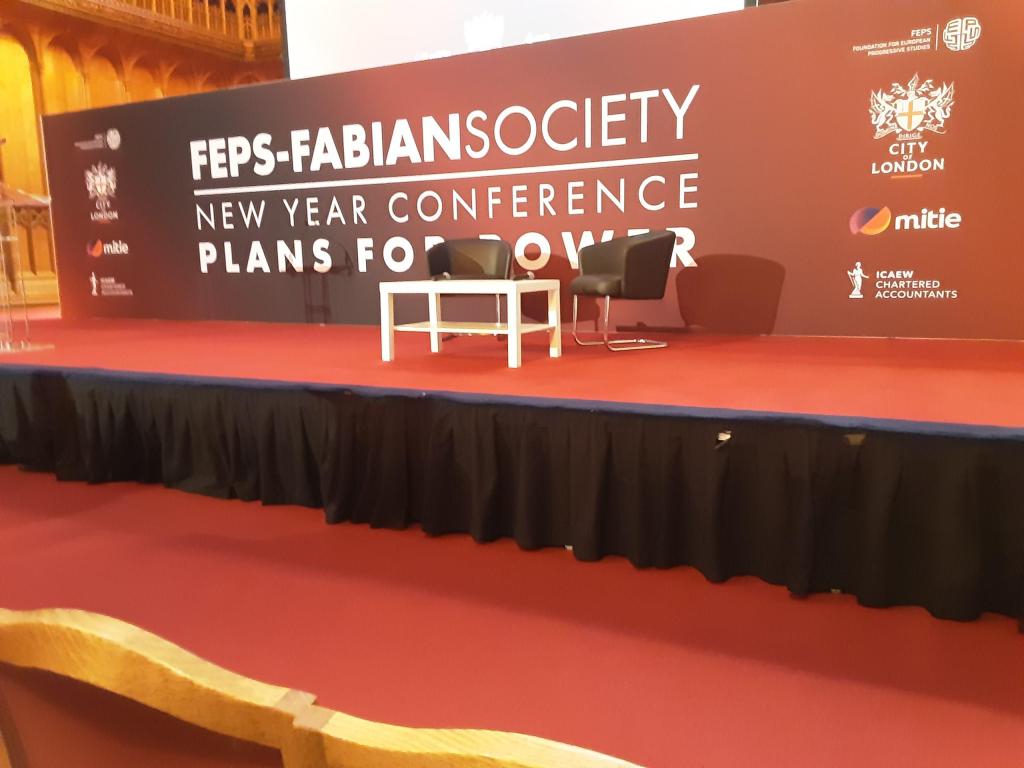
PLANS FOR POWER- WOMEN AND EQUALITIES

This article is part of a series covering the Fabian New Year Conference , written by Dave Baldock and Sue Watson

Panel consisted of: – Anneliese Dodds MP, Shadow Secretary of State for Women and Equalities.

                                Cllr Catherine Fookes, PPC for Monmouthshire.

                                Cllr Anya Sizer, Speaker of Hackney Council

                                Dr. Liz Hind, Secretary of Fabian Women’s Network

                                Chair:Cllr Marianna Masters, Chair of Fabian Women’s Network.

Annelise Dodds opened the session by emphasising 2024 is a pivotal year for the UK. She stated this could be the year where the country turns the page on division, on inequality. Where cruel barriers are removed. Annelise pointed out the gender pay gap is rising, online misogyny is rising, delays in court cases/actions are rising; that groups that put so much into society are getting so little out. This, she said, has to change.

Economic growth must include all with equalities running through all of Labour’s policies.

 Approximately $34billion is the cost to the economy of inequality. An example given was the impact of menopause. Labour will expect the workplace to have a menopause action plan. The estimate is approximately an additional £11billion to the economy if menopause support is in place. The pressure on family life was discussed with the economic along with societal impacts shared. Labour would ban zero-hour contracts and look to the use of flexible contracts.

Approximately £20billion would be added to the economy by closing the ethnic minority employment gap. For those with a disability, too many are on or below the breadline. Labour would bring in an expectation that disability pay gap would be reported. A range of suggested adaptations were shared. By lowering the pay gap for disabled workers by 2% this would add £3billion to the economy.

Annaliese called time on old ways of dividing people, on bluster, on failure and bravado and called for a government based in the Fabian tradition of evidence based practice.

This was followed by Cllr Sizer-she discussed how SEND children and young people are treated, particularly neurodiverse individuals. This, she sees, is a litmus test of who we, as a society are. The parent experience is of barriers faced at every turn. Evidence has shown mothers of teenagers with ASD exhibit the same stress as combat soldiers. Depression amongst parents is high too. There are financial and practical implications for parents too. There is a need for a change where parents/carers thrive not just survive. She pointed out the Governments recent SEND plan is simplistic and not working. Cllr Sizer called for Labour to introduce policies where SEND and trauma informed practices are embedded throughout all policies. The SEND “black hole” in council budgets and why was acknowledged however it was stated that there is a need for whole system change where there is a whole family focus on mental health, where there are parent coaching opportunities. This would be economically sound practice as well as emotionally literate.

Cllr Fookes spoke of Barbara Castle and Harriet Harman and the Acts these women brought into law. She then raised the issue of childcare and how the majority of unpaid care was undertaken by women. Wales provides 30 hours childcare for all 3-4year olds. 2.5% of GDP is invested in childcare.

A further issue she raised was around ending health inequalities for women. Cllr Fookes closed her speech by calling for 50/50 representation and leadership within the Labour party, the cabinet and parliament itself. Currently women make up 35% of parliament. Gender parity in parliament could be a quick win for an incoming Labour government.

Dr Hind spoke next re gender responsive budgeting work she has undertaken for OECD. Further this work has included how to embed this within public services. She stated 9% can be added to growth in the economy, if gender responsive budgeting is adopted. She stated that men are not the default that women diverse from, that economies are people.

There was a question from the floor about those leaving care and how they are catered for. There was a question as to if leaving care should be a protected characteristic under the Equalities Act.

A further question around the role for procurement when agreeing contracts, in supporting and enabling disabled workers was also posed.

Annaliese replied that the New Deal for Working People will help all. So many aspects of the 2010 Equality Act are not being used and Labour will use this Act more effectively. Additionally, she pointed out the Government’s disabled people strategy has been ruled illegal as they did not speak to disabled groups. Labour will engage with community groups to ensure the voices of people are heard by Labour. Labour will be the government of all not just some.

SW